

AI as a Lever for Global Equity in Education
Article Summary
📖 9 min readAI is redrawing the boundaries of access to knowledge: from Malaysia deploying Gemini at a national scale to multilingual AI dubbing tools, a profound reshuffling of global educational possibilities is underway.
Key Points:
- The rollout of Gemini for Education in Malaysia demonstrates how AI compensates for educational support inequalities at an institutional scale.
- Language barriers are the glass ceiling of global education: AI-powered multilingual video dubbing makes it surmountable for the first time.
- Concrete content localization through AI reduces internationalization costs for freelancers and agencies, creating an accessible competitive advantage.
- Equity through AI requires three rarely-aligned conditions: digital infrastructure, human pedagogical support, and protective data governance.
- Persistent contextual memory is the critical infrastructure that makes AI truly useful at scale, both globally and within local teams.
AI as a Lever for Global Equity: When Technology Erases the Boundaries of Knowledge
Two hundred million students in middle-income countries. Access to quality higher education that still depends, in 2025, on your postal code or mother tongue. And a technology that, for the first time, is seriously beginning to tackle this structural problem.
What we’re observing in Malaysia and in the AI dubbing sector isn’t a gadget. It’s a weak signal announcing a profound reshuffling of the world’s educational possibilities. And if you think this only concerns large institutions, you’re in for a surprise.
Malaysia as a Full-Scale Testing Ground
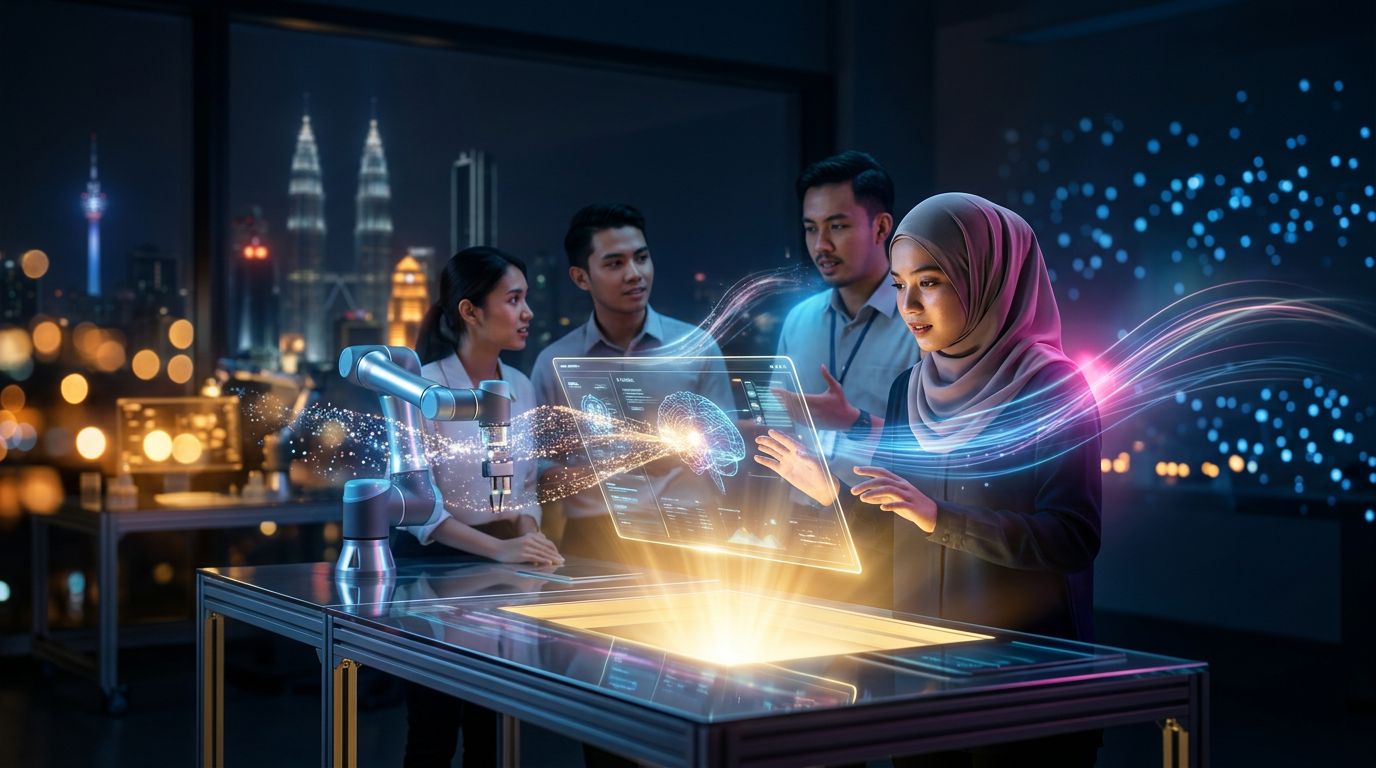
Here’s where it gets interesting. The rollout of Gemini for Education across Malaysian public universities isn’t about a few dozen students in a pilot lab. We’re talking about national-scale adoption in a country of 33 million inhabitants with a public university system hosting hundreds of thousands of enrolled students each year.
What Malaysians understood before many others: AI doesn’t replace teachers. It compensates for inequalities in access to mentorship. A first-generation university student in Kelantan doesn’t have the same network, the same informal tutors, the same social capital as a student in Kuala Lumpur. AI doesn’t make this distinction.
In practice, the deployed tools allow students to interrogate complex concepts at 2 AM, get feedback on their writing without waiting for marking week, work in English even when it’s not their first language. It’s pragmatic. It’s measurable. And that’s where the real value lies.
“Access to quality tutoring shouldn’t depend on family income.” — an obvious truth that AI is finally making operational.
What you’re never told in discourse about AI in education: the challenge isn’t AI itself, it’s the infrastructure that makes it accessible. Deploying Gemini at a university without training faculty to integrate it pedagogically is like buying a Ferrari without a driver’s license. Malaysia seems to have grasped this nuance — the rollout includes faculty training, not just a software license.

Language Barriers: The Real Glass Ceiling of Global Education
Let’s flip the perspective. We talk a lot about economic inequalities in access to education. But language barriers might be even more fundamental — and less often named.
7,000 languages spoken in the world. Nearly all quality educational content in fewer than ten. English, Mandarin, Spanish concentrate the bulk of available resources. If your mother tongue is Swahili, Tamil, or Quechua, you statistically have access to a tiny fraction of the world’s online knowledge.
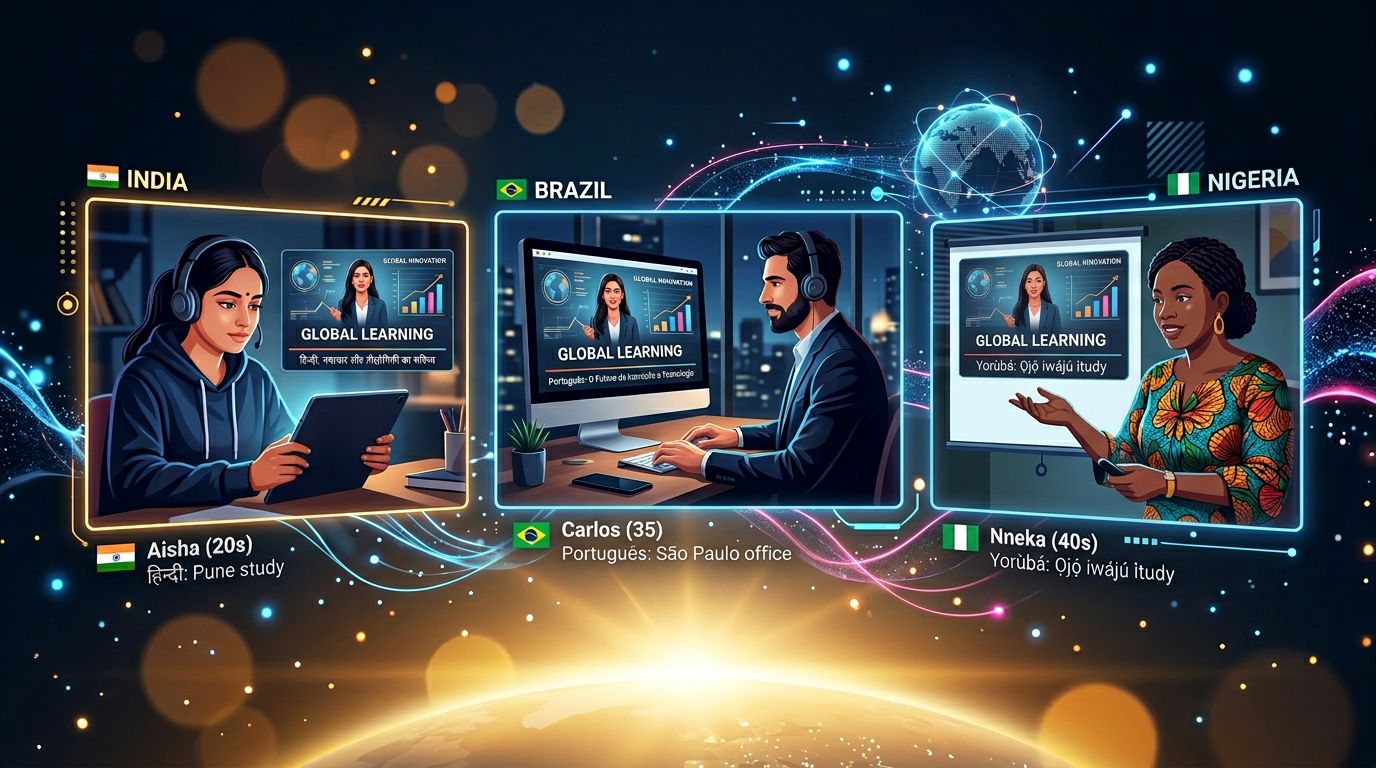
This is where the second underlying trend comes in: multilingual AI video dubbing. OpenAI models and their equivalents now allow you to synchronize lip movements, voice tone, speech rhythm across dozens of languages with a fidelity that would have seemed like science fiction five years ago. A TED talk in English can be watched in natural Hindi, with the original speaker’s voice, their inflections, their energy. Not a robotic voice. Not approximate subtitles. The real experience.
My analysis reveals something important here: it’s not just about passive accessibility. It’s a matter of cognitive dignity. Understanding a concept in your mother tongue means truly understanding it — not just translating it in your head while trying to keep up. Learning science is clear on this point: acquisition of complex knowledge is significantly more effective in the primary language.
Language barrier eliminated. The implications for global education are dizzying.
What This Concretely Changes for Content Creators and Teams
Let’s look at this from another angle — that of the freelancer or agency producing educational or professional content.
For years, “going international” meant: translation budgets, dubbing studios, weeks of delays, prohibitive costs. Result: only major players could afford to localize their content. A training agency in Lyon with clients in Belgium, Switzerland, and Morocco had to choose between staying French-focused or investing massively.
This paradigm is crumbling. And the practical implications are immediate:
- An independent trainer can now consider an Arabic or Spanish-speaking audience without going through external providers
- A digital agency can offer multilingual content creation as a differentiating service
- A consultant can share their expertise in emerging markets where demand exists but local-language supply is scarce
But watch the trap. Technology alone isn’t enough. Dubbing a video mechanically without adapting cultural references, local examples, regional metaphors — that’s producing something technically correct and culturally empty. True localization is a craft. AI reduces the barrier to entry, but it doesn’t replace human judgment.
Equity Through AI: Real Promise or Marketing Narrative?
After examining these two cases — institutional rollout in Malaysia and multilingual AI dubbing — one question imposes itself. Are we talking about genuine structural change or a well-packaged narrative from tech companies needing new markets?
Complete honesty: probably both.
Google has obvious interests in deploying Gemini across Asian public universities. Students trained on these tools become loyal users. Institutions that integrate these stacks become dependent. It’s a known playbook. That doesn’t mean the educational impact is zero — it means you need to look at it with both eyes open.
What you’re never told in AI education success stories: longitudinal studies are still missing. We have engagement indicators, qualitative testimonials, satisfaction metrics. We have far less robust data on real learning impact at 3 or 5 years.
Equity through AI is possible. But it requires three conditions rarely aligned simultaneously:
Digital infrastructure enabling access — there’s no democratization if electricity is intermittent or connection nonexistent. Human pedagogical support that contextualizes the tool. And data governance protecting the most vulnerable users, not the least equipped to negotiate opaque terms of service.
Technology without governance equals a new form of extraction. The nuance matters.
What This Means for Your Daily Workflow
My experience has taught me that major global trends always have micro implications. Here are the three I draw from these developments — actionable insights, not abstract speculation.
First insight: localization becomes an accessible competitive advantage. If you’re freelance or in an agency, multilingual AI dubbing is no longer reserved for Netflix. It’s a concrete opportunity for differentiation. The Francophone market alone represents 300 million speakers — but if you can also serve the Spanish or Arabic market with reduced marginal cost, your TAM changes radically.
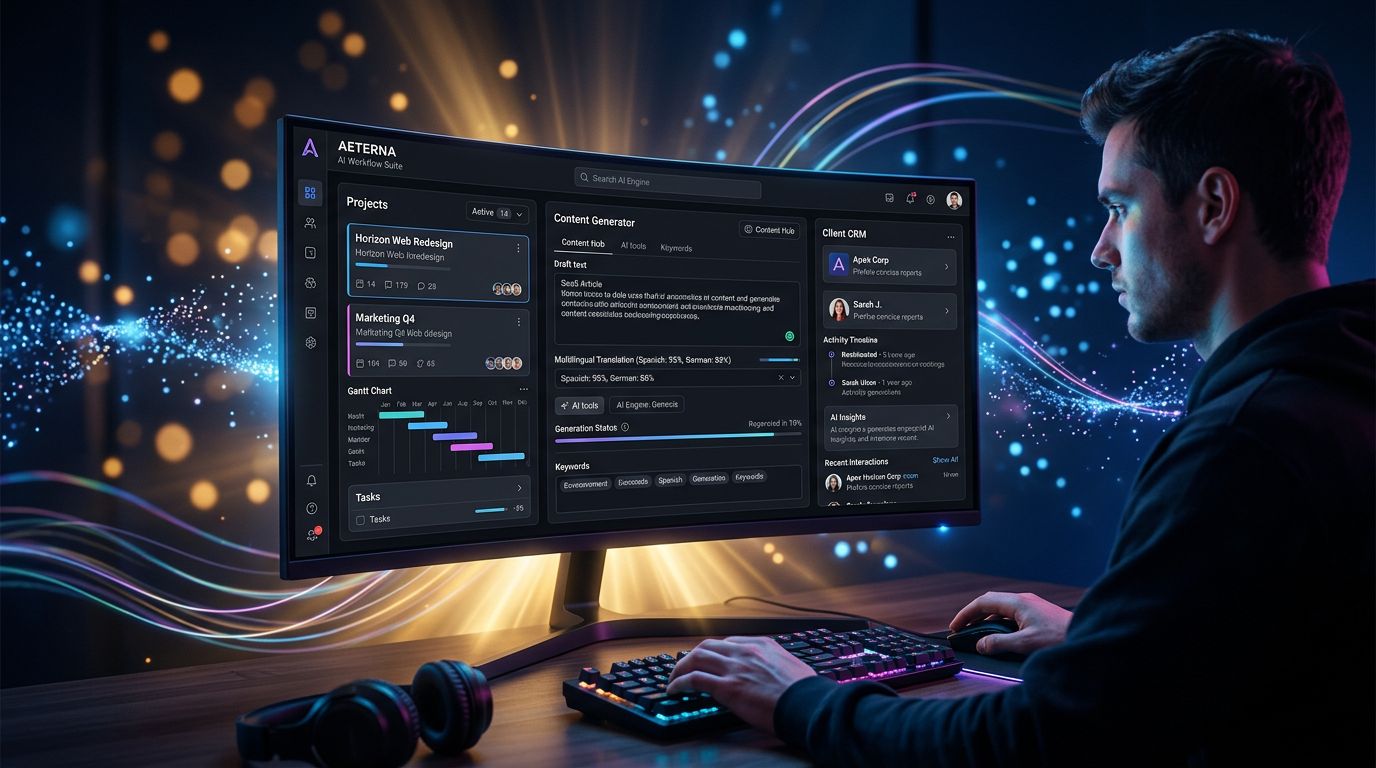
Second insight: persistent context becomes critical at scale. What Malaysian universities are discovering with Gemini is exactly the problem I solved with Nova Mind: an AI assistant that starts from scratch with each conversation is fundamentally limited. At an institutional scale, it’s unbearable. At the scale of a freelancer with 30 active clients, it’s the same. Memory isn’t a nice-to-have feature. It’s basic infrastructure.
Third insight: equitable AI starts with useful AI. Before thinking “global impact,” think “impact on my most demanding client.” If your AI stack doesn’t hold up in a dense professional context — multiple projects, multiple stakeholders, complex histories — it won’t scale. Local robustness precedes global impact.
The Real Revolution Isn’t Where You’d Expect
My obsession with detail has taught me one thing: profound transformations rarely arrive where we expect them. The real revolution of AI in global education isn’t the most powerful or most publicized model. It’s the combination of three discrete elements — linguistic accessibility, contextual memory, institutional-scale deployment — that creates something qualitatively different.
What we see in Malaysia and in multilingual dubbing is the beginning of a world where the quality of your access to knowledge no longer depends on your geography or mother tongue. Not yet universal reality. But the direction is clear.
And for those building professional workflows today: the same principles that make AI equitable at a global scale — persistent context, multilingual accessibility, deep integration into existing processes — are exactly those that make an AI assistant truly useful across a team or freelance operation.
What Nova Mind concretely does on these two fronts:
Permanent memory of your clients, projects, and preferences — no more lost context between sessions. Configurable social media content generation by platform and editorial line — not copy-paste, real adaptation. And an MCP connection with Claude Desktop to orchestrate everything from one place.
Equity starts with utility. And utility starts with a tool that remembers you.
Share this article
Social networks
Analyze with AI

Charles Annoni
Front-End Developer and TrainerCharles Annoni has been helping companies with their web development since 2008. He is also a trainer in higher education.