
AI & IP: the secret weapon freelancers need to protect their work
Article Summary
📖 9 min readThis article explores how artificial intelligence is revolutionizing intellectual property protection for freelancers and solopreneurs. It highlights the gaps in traditional methods and explains how AI offers accessible tools to monitor and document their creations, filling a critical need for legal security.
Key Points:
- Many freelancers neglect intellectual property protection due to a lack of time or budget.
- Automatic copyright protects the form, but leaves concepts, methods, and trade names vulnerable without proactive steps.
- Artificial intelligence steps in to analyze, monitor, and document intangible assets, making IP protection more accessible.
- These AI tools allow solopreneurs to understand and manage their intellectual property risks independently.
- The democratization of IP protection through AI gives independent creators the means to actively secure their innovations and identities.
- It is crucial for freelancers to understand what they actually own and what remains exposed without active protection.
What nobody tells you about your creations
47% of freelancers have never filed a single trademark. Not out of negligence — but because of a lack of time, budget, or because IP firms cost more than their first contract. Meanwhile, their logos, methods, and brand names remain exposed.
Here’s where it gets interesting: AI is changing the game. Not to create on your behalf — but to protect what you’ve already created.
Intellectual property has always been the domain of lawyers and large corporations. Opaque procedures, endless delays, prohibitive costs. For a solopreneur managing clients, accounting, and business development solo, adding “IP monitoring” to the list was pure fantasy.
Not anymore.
Intellectual property: the freelancer’s blind spot
Let’s start with a ground-level observation: most freelancers protect their creations with… nothing. Or close to it. An implicit copyright on their texts, a vague clause in their terms and conditions, and the hope that nobody will steal their visual identity.
What nobody ever tells you: automatic copyright protects the form, not the concept. Your 5-step coaching method? Your client onboarding process? Your trade name? All of that remains vulnerable without proactive action.
Vulnerable. And often invisible to your own eyes.
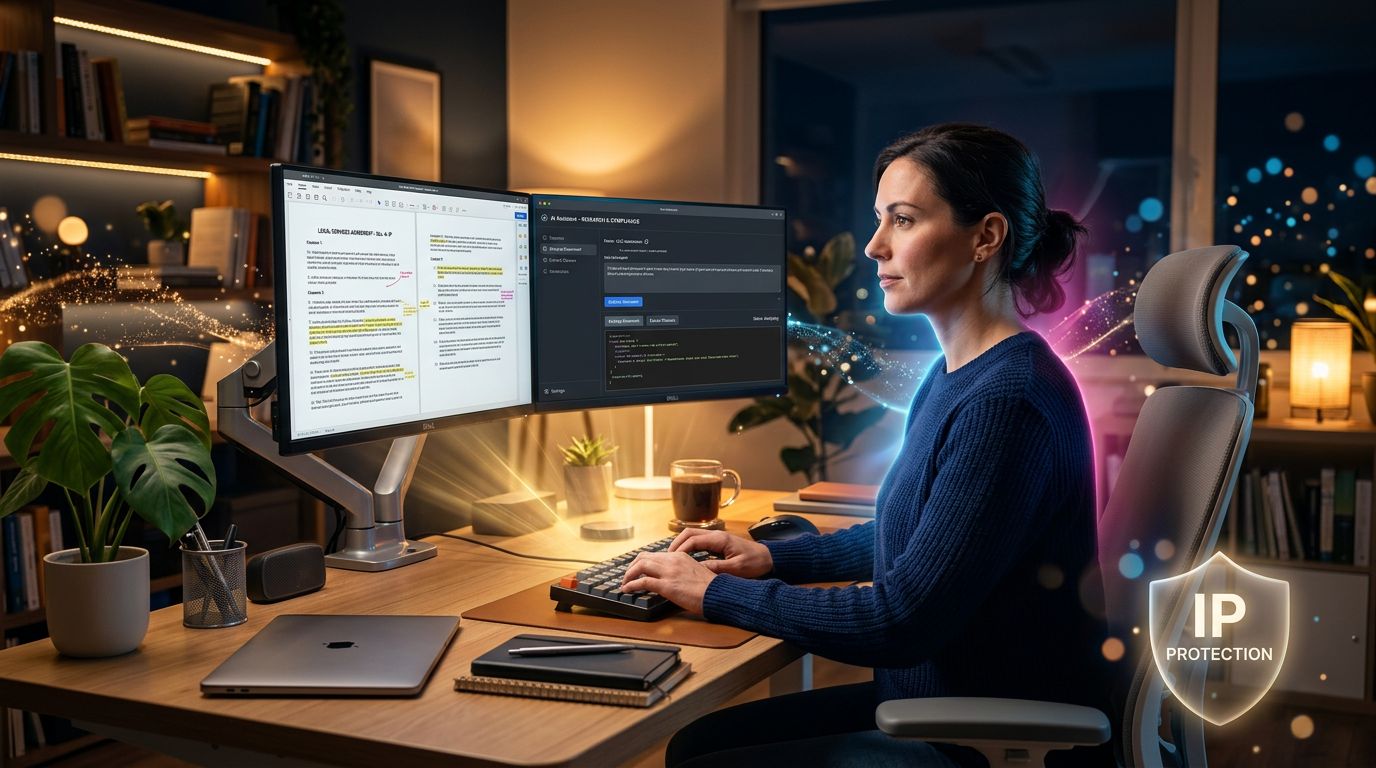
AI steps in exactly where the freelancer lacks resources: analysis, monitoring, and documentation. Not to replace a specialist lawyer — but to finally give you the means to understand what you own and what you’re risking.
What AI can concretely do for your IP
Let’s flip the situation. Instead of starting from the legal problem — complex and anxiety-inducing — let’s start from what AI already does well, and see how it applies to protecting your assets.
Similarity analysis and conflict detection
You’ve found a name for your new offer. Before printing it on 500 business cards, you should check it doesn’t already exist. Traditionally: hire a firm, wait 2 weeks, pay €300. Today, AI tools connected to INPI, EUIPO, or USPTO databases can scan thousands of registered trademarks in minutes.
The gain is real: identification of potential conflicts before filing, savings on trademark rejections (which still cost you filing fees), and above all, peace of mind.
AI-assisted documentation drafting
My obsession with detail has taught me one thing: in IP, what isn’t written doesn’t exist. Creation dates, precise descriptions of works, timestamped captures, assignment contracts — all of this makes up your evidence file if a dispute arises.
AI can help you structure this documentation systematically. Generate precise technical descriptions of a creation. Draft intellectual property clauses tailored to your contracts. Summarize your rights according to the type of work produced.
This isn’t legal advice. It’s intelligent organization.
Automated monitoring of your assets
Here’s the use case that seems most underestimated: continuous surveillance. Someone is using your brand name on Instagram? A competitor has copied your sales page word for word? Without active monitoring, you’ll never know — or you’ll find out too late.
AI systems combining semantic search and web monitoring can detect unauthorized uses of your creations in near real-time. For a freelancer, that’s the difference between discovering plagiarism 6 months later and acting within 48 hours.
The real limitations — and why it matters to say them
My expert advice: be wary of tools that promise to “manage your IP” turnkey. AI is powerful for analysis, monitoring, and documentation. It does not replace the strategic decision of a legal professional.
A few realities to factor in:
- AI can identify potential conflicts, but cannot rule on their legal validity
- Drafting complex contracts (rights assignments, exclusive licenses) always requires expert review
- The nuances between copyright, trademark, patent, and trade secret vary by country — and a generalist AI may oversimplify
Use AI for preparation work. The lawyer for decisions that truly matter.
Integrating IP protection into your daily workflow
What nobody ever tells you: intellectual property protection isn’t a one-time event. It’s a continuous process. And that’s exactly where AI becomes a real productivity lever, not just a gadget.
Experience has taught me that a freelancer who documents their creations as they go — with an automated system — is infinitely better protected than a freelancer who is “going to deal with it someday.”
Here’s how it can integrate concretely:
Automating creation documentation
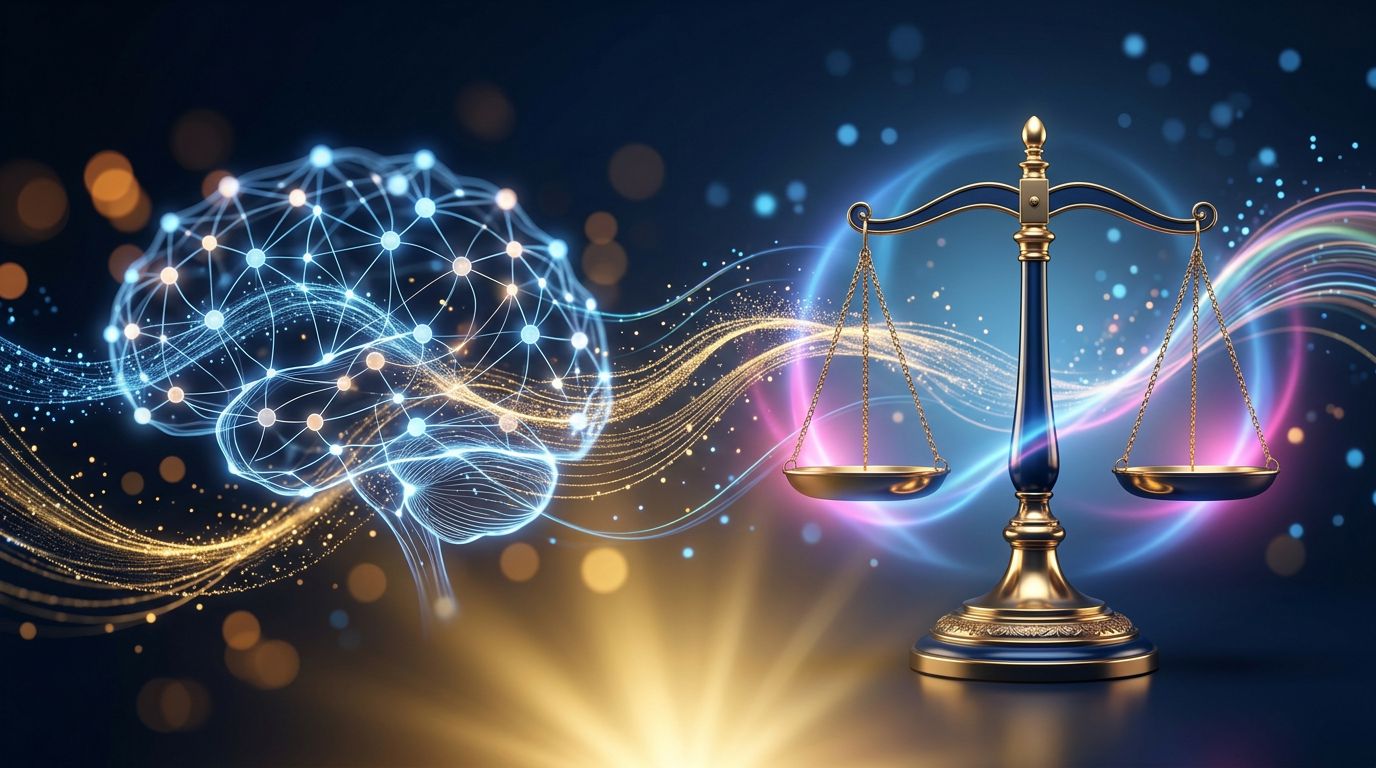
With each new project, an AI assistant can automatically generate a timestamped descriptive sheet: nature of the work, creation date, technical description, captures or exports. This digital file becomes your proof of prior creation if someone contests your rights.
With a tool like Nova-Mind, this type of workflow is automated directly from your project management space. The AI assistant’s persistent memory knows your clients, your deliverables, your history. No need to re-contextualize every time — the system remembers.
Integrating IP clauses into your standard contracts
An AI assistant can help you build a library of contractual clauses tailored to your different types of work. Web development, art direction, consulting, copywriting — each activity has its own specificities regarding rights assignment.
Result: your contracts are consistent, your rights are defined from the start, and you no longer improvise with each new client.
Monitoring your digital footprint
Set up automated monitoring on your brand name, your main creations, your reference texts. AI semantic monitoring tools can detect paraphrases and partial copies that standard Google searches systematically miss.
15 minutes of setup. Continuous protection.
What this really changes for you
Let’s look at this from another angle: it’s not just a matter of protection. It’s a matter of value.
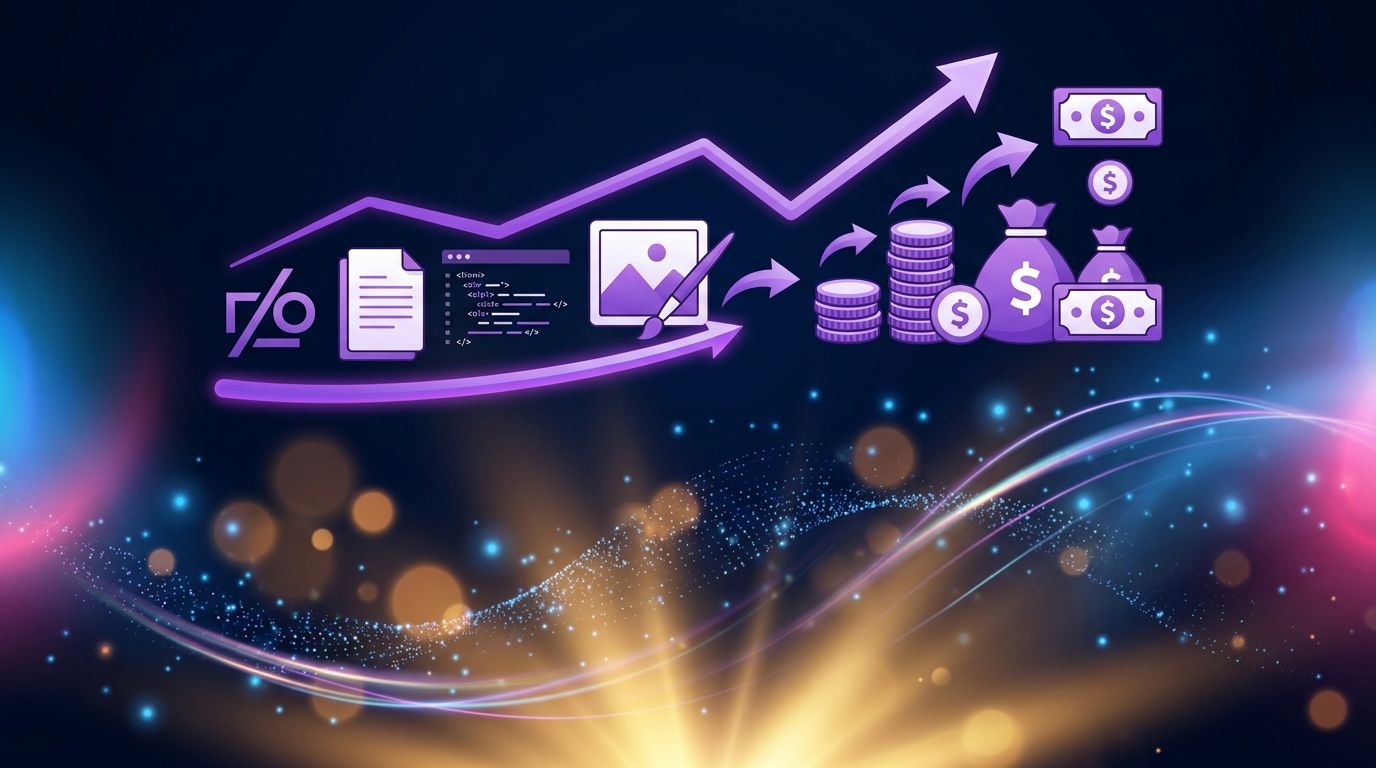
A freelancer who masters their intellectual assets can monetize them differently. License a proprietary method. Sell protected templates. Charge a premium for deliverables with clearly defined rights. Well-managed intellectual property means additional revenue — not just defense.
“Intellectual property is often perceived as a shield. In reality, it’s also a commercial weapon.” — A perspective shared by many business development advisors.
Freelancers and solopreneurs who integrate these practices over the next 12 months will have a significant competitive edge. Not because AI is magic — but because they will have systematized what their competitors still leave to chance.
3 concrete actions to start today
Analysis reveals a recurring pattern: freelancers who act on their IP rarely do so comprehensively. They start with one specific point, build the habit, and gradually expand.
Here are the 3 most effective entry points:
Audit what you already own. List your main creations — trade name, visual identity, proprietary methods, recurring content. Ask an AI assistant to help you categorize each asset according to its applicable type of protection. You’ll be surprised by what you already have — and what remains exposed.
Check your brand name. Before going further, run a search on the INPI database (for France) or EUIPO (for Europe). AI tools can automate this verification and alert you to potential conflicts. 10 minutes that can save you years of litigation.
Add an IP clause to your standard contract. Just one. The one that defines who owns the rights to the deliverables you produce. It’s the most frequently overlooked question — and the most contentious. An AI assistant can suggest wording adapted to your activity.
Your creations deserve better than chance
Straight talk: if you’re reading this article, you’ve already understood that AI isn’t just a content generation tool. It’s a lever for structuring, automation, and protection.
Intellectual property is no longer reserved for companies with a legal department. The tools exist. The workflows can be built. The barrier to entry has dropped dramatically.
What remains is the decision to take it seriously.
Nova-Mind natively integrates the memory of your projects, clients, and deliverables — exactly the type of continuous documentation that constitutes your first line of defense in terms of IP. If you want a system that works for you even when you’re offline, this is the right starting point.
Your creations are worth something. Protect them like it’s true.
Discover how Nova-Mind can automate your project documentation →
Share this article
Social networks
Analyze with AI
Charles Annoni
Front-End Developer and TrainerCharles Annoni has been helping companies with their web development since 2008. He is also a trainer in higher education.