


AI: Revolutionizing Digital Strategy, Local SEO & Security
Article Summary
📖 8 min readArtificial intelligence has become the pivot of modern digital strategy, redefining the rules of local SEO and intensifying cybersecurity stakes. This article explores how AI is simultaneously a powerful visibility lever and a source of risk, highlighting the importance of a balanced approach.
Key Points:
- AI has brutally changed the rules of digital strategy, becoming the referee rather than just a tool.
- AI represents both the best visibility lever and the largest risk exposure surface for any business.
- AI-powered search engines, like Google SGE, are reinventing local SEO by understanding context and query intent — not just keywords.
- NAP consistency (Name, Address, Phone) has become an indispensable foundation for local SEO in the AI era, as LLMs aggregate data from multiple sources.
- Optimizing visibility without securing systems against AI-related risks amounts to an unbalanced and vulnerable digital strategy.
- Local queries account for 46% of all Google searches — a figure AI makes even more relevant through trust signals and structured data integration.
AI is no longer playing in the marketing arena. It has become its referee.
For years, “digital strategy” meant good content, solid backlinks, and a reasonable Google Ads budget. The winning trio. Except AI changed the rules of the game — not gradually, not gently. Brutally.
Here is the paradox that few agencies have yet integrated: AI is simultaneously your best visibility lever and your largest risk exposure surface. Optimizing one without securing the other is like building a glass storefront in an earthquake zone.
What nobody ever tells you at marketing conferences? The real digital transformation is fought on two fronts. And most teams only cover one.
Local SEO in the AI era: the rules have changed, but the fundamentals haven’t
Let’s flip the narrative. Everyone panics that “AI will kill SEO.” What if it’s the opposite?
AI-powered search engines — Google SGE, Perplexity, ChatGPT Search — don’t eliminate the need for local visibility. They reinvent it. The fundamental difference: these systems no longer read your pages like a 2015 crawler. They understand them. Context, intent, semantic consistency. Every signal counts differently.
For a bakery in Lyon, an accounting firm in Bordeaux, or a web agency in Nantes, this changes everything. Local queries account for 46% of all Google searches, and AI-generated results now incorporate structured data, reviews, and trust signals that classic algorithms ignored.
What works now:
NAP consistency (Name, Address, Phone) is no longer optional — it’s the foundation. LLMs generating local responses rely on data aggregated from dozens of sources: Google Business Profile, industry directories, mentions in local press. One inconsistency, and your trust score collapses before the algorithm even considers you.
Customer reviews, next. Not for their volume — for their semantic specificity. A review mentioning “fast response on Saturday morning in Toulouse” delivers more value than a generic “great service.” AI extracts these contextual signals to qualify local relevance.
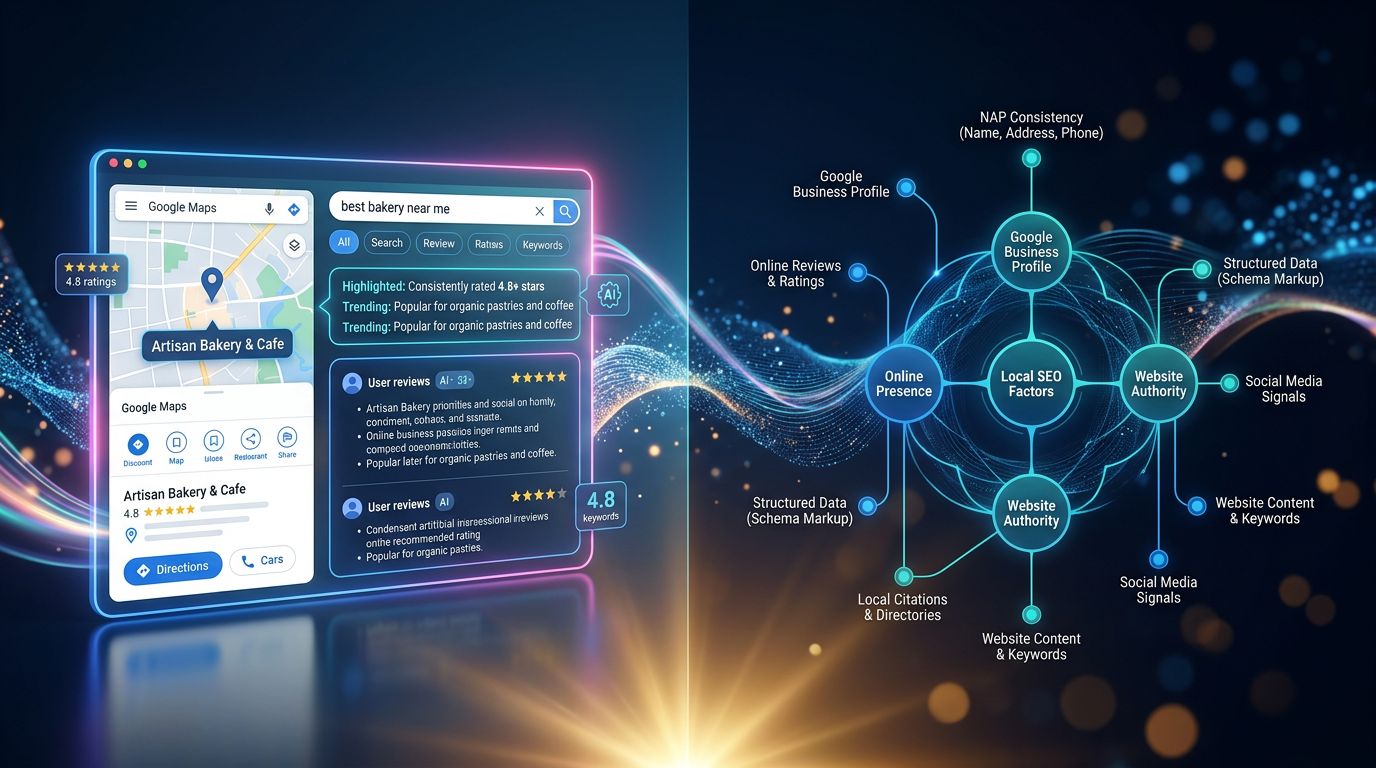
Here’s where it gets interesting: local pages optimized for AI no longer look like traditional SEO pages. Gone are the text blocks stuffed with “best plumber Paris 15.” In comes structured content, FAQ sections in natural language, precise schema.org data. AI wants to understand who you are and who you exist for — not count your keyword occurrences.
The angle nobody is exploiting yet: create content that answers the questions LLMs are actually asking your potential clients. Analyze “People Also Ask,” Perplexity reformulations, ChatGPT suggestions about your sector. That’s your treasure map.
Cybersecurity and AI: the invisible pillar of your brand reputation
My analysis reveals something CMOs avoid looking at directly: cybersecurity has become a marketing variable.
It’s no longer a topic reserved for IT departments. It’s a question of trust. And trust, today, is your primary brand asset.
OpenAI’s Daybreak initiative perfectly crystallizes this shift. This offensive security research program — designed to test the limits of AI models before they are exploited by malicious actors — signals a major awakening: AI infrastructures are attack surfaces. New, complex, and underestimated.
“Security is not a feature. It is the condition of trust.” — Founding principle of any sustainable digital ecosystem.
For a digital agency or freelancer integrating AI tools into their client workflow, this raises concrete questions. Where is your clients’ data stored? Who can access it? What is your plan if your AI stack is compromised?
These questions are not theoretical. In 2024, attacks targeting AI APIs increased by 400% according to OWASP. Attack vectors now include prompt injections, data exfiltration via misconfigured models, and manipulation of persistent memory systems.

What nobody tells you in growth hacking webinars: a client data breach through your AI tool doesn’t just destroy your GDPR compliance. It destroys your reputation. And no PR budget repairs that in 6 months.
The convergence: where security and visibility meet
Let’s look at this from another angle.
Both dynamics — AI optimization for local visibility, securing AI infrastructures — converge toward the same objective: digital trust. And digital trust has become a ranking signal.
Google stated it explicitly with its E-E-A-T guidelines (Experience, Expertise, Authoritativeness, Trustworthiness). Your site’s security, your data protection, your transparency on AI practices — all of this contributes to the trust score that algorithms evaluate. A compromised site loses its rankings. A brand associated with a data breach loses its clients.
Today’s digital strategy is no longer siloed. SEO, cybersecurity, user experience, AI — these are the four pillars of the same structure. The agencies that understand this are already offering integrated audits. The others are still selling “SEO packages” piecemeal.
My expert advice: before investing in AI optimization of your local pages, audit your infrastructure. Not out of paranoia — but to build on solid foundations. Optimizing on a vulnerable infrastructure is building on sand.
What this concretely changes for your workflow
Experience has taught me that major transformations get lost in abstraction. Here is what this means in practice, right now, this week.
For your local SEO:
- Audit your NAP data consistency across 15 to 20 sources (Google, Yellow Pages, Yelp, LinkedIn, industry directories). A single inconsistency is enough to blur your local trust signal.
- Restructure your local pages with complete schema.org LocalBusiness markup. LLMs rely heavily on this structured data to generate their responses.
- Create a FAQ per local page that answers questions in natural language. Test your own queries on Perplexity and ChatGPT — see what comes up, and fill the gaps.
For your AI security:
- Inventory every AI tool you use and the client data it touches. CRM, AI assistant, content generator — each access point is an exposure surface.
- Verify that your AI providers are GDPR-compliant and publish security audits. Transparency about security practices is a verifiable trust signal.
- Implement granular access policies. Who has access to what, in which tool, with what permission level. Simple, but ignored by 80% of teams.
Three insights to take away now
1. Local optimization for AI is not improved classic SEO — it’s a different discipline. Semantic consistency and structured trust signals replace keyword density. Adapt your methods or lose ground to competitors who already have.
2. Your AI stack’s cybersecurity is a marketing asset. Digital trust influences ranking, client retention, and brand reputation. A security audit is no longer an IT expense — it’s a marketing investment.
3. Both fronts are linked. Treating SEO and security as separate topics is yesterday’s strategy. The players who will dominate the coming years are building trusted digital infrastructures — visible and secure.
Tomorrow’s digital strategy is built today
But beware of the trap: reading this article changes nothing. Action changes everything.
AI has redefined the rules. It has created new local visibility opportunities that few are exploiting correctly yet. It has also created new vulnerabilities that few are securing seriously yet. These two realities coexist — and ignoring either one means playing at half capacity.
At Nova-Mind, we built our stack around these two imperatives: persistent memory on private infrastructure (Supabase, your data stays with you), and AI workflow optimization for measurable results. Not because it makes a good story — but because it’s the only way to build a trustworthy daily work tool.
Your concrete next step: do the audit. Not the grand annual audit that ends up in a drawer. The 2-hour audit, this week: NAP consistency on your local pages, inventory of your AI tools and the data they touch, one natural-language FAQ on your most strategic page. Two hours. Measurable results within 30 days.
Visibility without security is growth on glass. Security without visibility is an empty fortress. Both together — that’s a strategy.
Share this article
Social networks
Analyze with AI

Charles Annoni
Front-End Developer and TrainerCharles Annoni has been helping companies with their web development since 2008. He is also a trainer in higher education.