
YouTube PiP & Multitasking: Adapt Your Video Strategy
Article Summary
📖 8 min readThe widespread rollout of YouTube's Picture-in-Picture mode demands a complete reassessment of video strategies. Audiences now consume content while multitasking, making audio primary and visuals secondary. Adapting your production to exist effectively in this new environment is no longer optional.
Key Points:
- Nearly half of mobile users watch videos while doing other things — a trend reinforced by YouTube's PiP mode.
- Video design must now aim for engagement in a reduced format, potentially without sound, transforming creators' primary objective.
- Picture-in-Picture mode turns video into companion content, where audio takes overwhelming precedence over visuals.
- Video strategies should favor narrative and conversational formats, as these are more resilient against declining visual attention.
- Although visual attention decreases, watch time on PiP videos can paradoxically increase, opening new engagement opportunities.
Your audience is watching your videos without actually watching them
47% of mobile users do something else while consuming video content. This isn’t an emerging trend — it’s already the norm. And with YouTube’s Picture-in-Picture mode rolling out to all mobile users, this reality has just taken on a new dimension.
The question is no longer “how do you capture attention?” It’s: how do you exist on a 150x90-pixel screen, in silence, while someone answers their emails?
If your video strategy hasn’t yet integrated this constraint, you’re producing content for a bygone era.
What PiP concretely changes in user behavior
Picture-in-Picture mode isn’t a trivial feature. It’s a structural shift in the relationship between users and content.
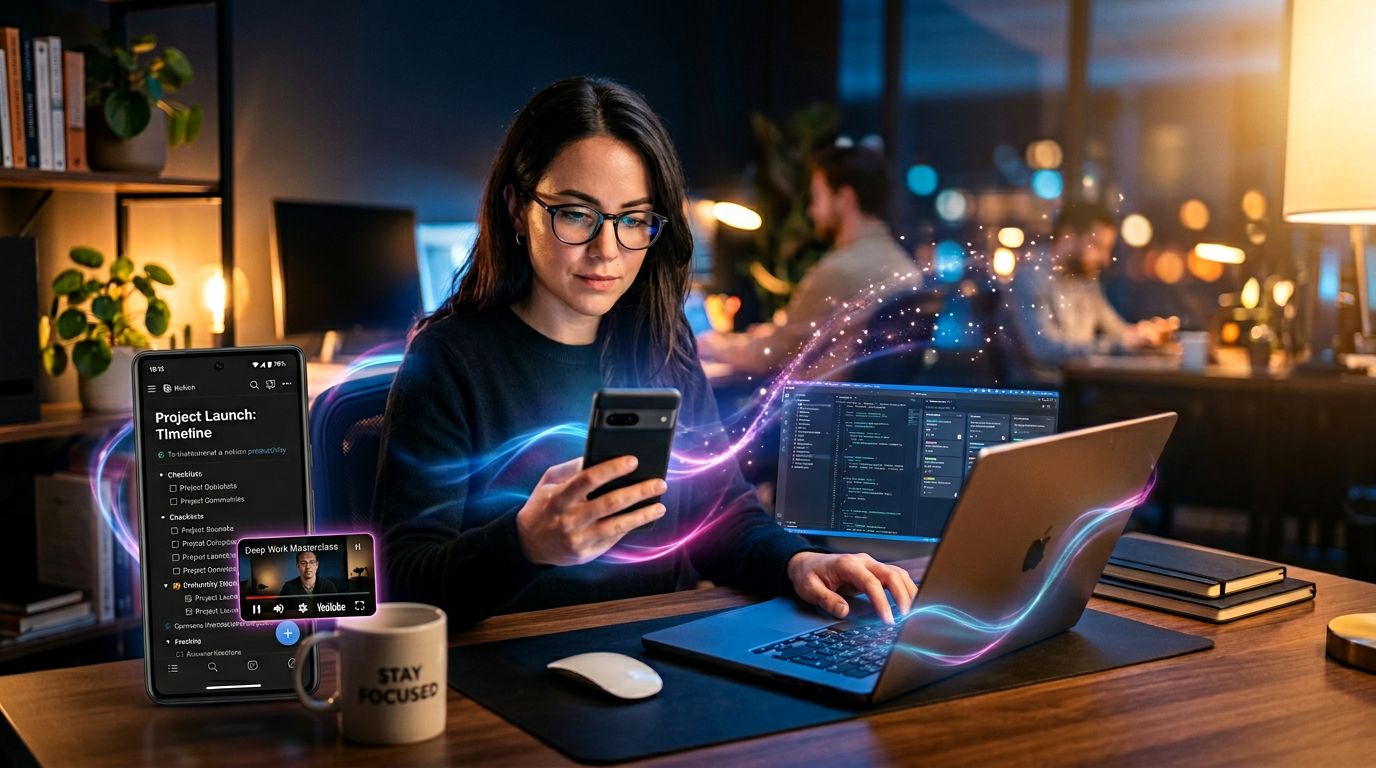
Before PiP became widespread on mobile, watching a YouTube video was a relatively exclusive act. Users closed other apps, focused on the screen. Not perfectly, not always — but the interface imposed a form of focus.
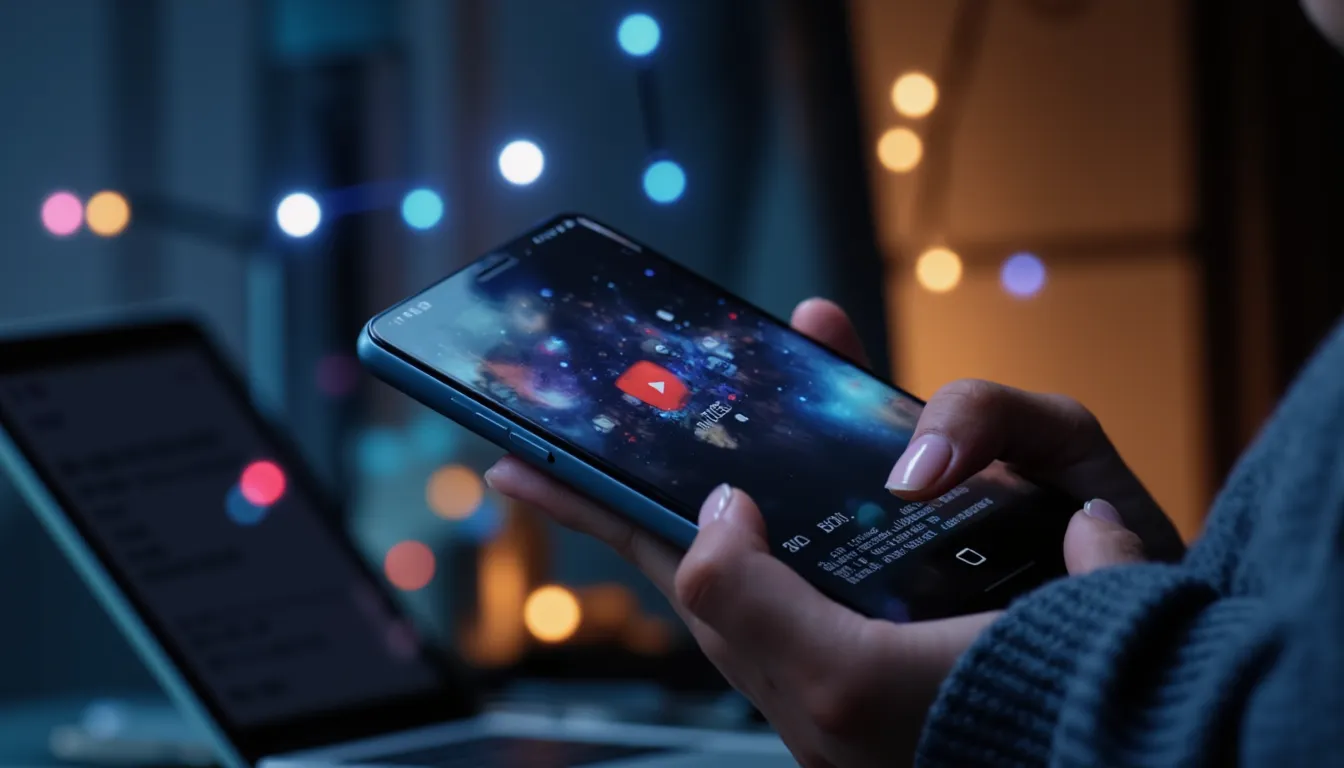
With PiP, that constraint disappears. The video floats. It accompanies. It becomes background audio with an optional image.
What changes on the user side:
- Visuals become secondary, audio becomes primary
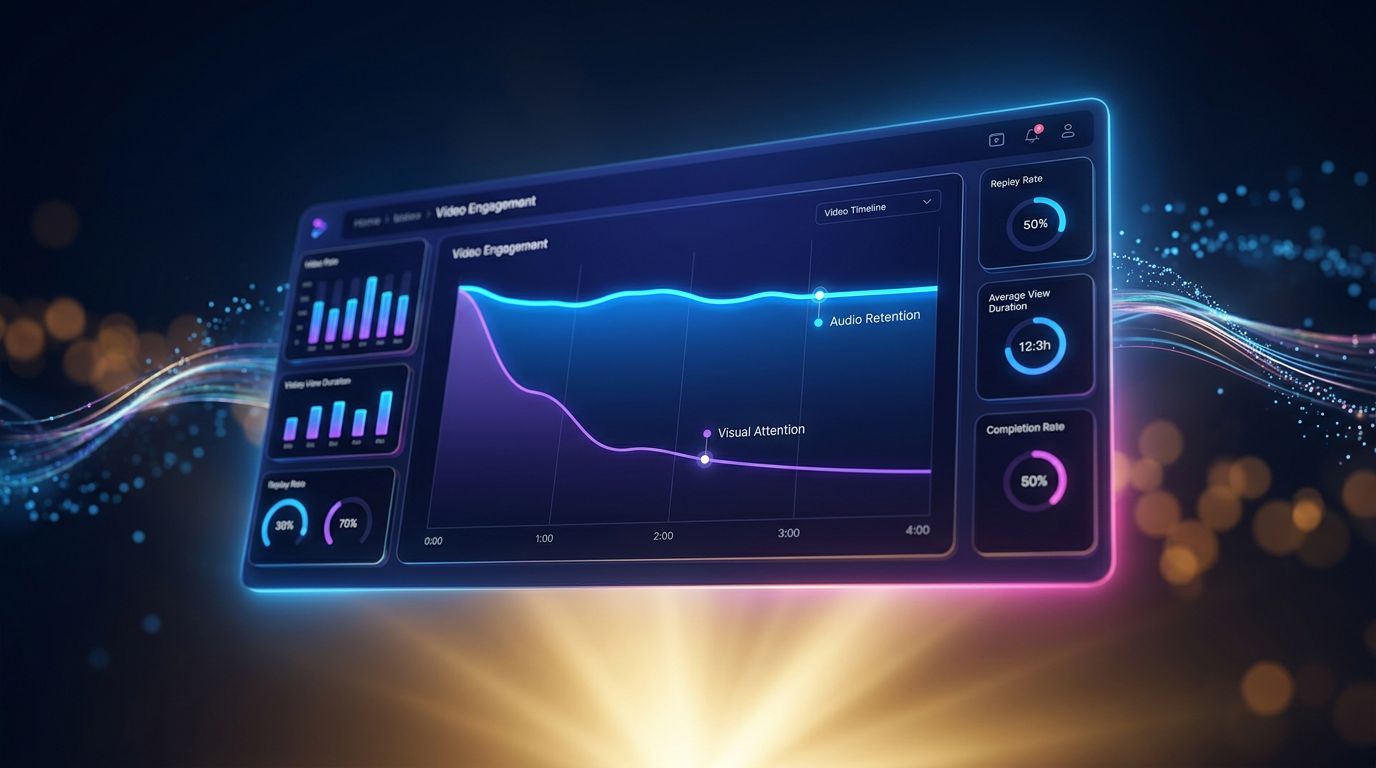
- Visual attention retention drops, but listening duration can increase
- Content that “demands” active viewing is penalized
- Narrative and conversational formats hold up better
This isn’t bad news. It’s a reshuffling of the deck. Creators who understand this first have a real advantage.
The classic mistake: keep optimizing for full screen
Here’s the trap most marketing teams are falling into right now. They know PiP exists. They still keep producing videos designed exclusively for full screen.
Concretely, what does that look like?
Silent 15-second visual intros. Complex graphics that require reading. CTAs that appear only as on-screen text. Product demos where “look closely at that button in the top right” is the only instruction.
In PiP mode, all of that disappears. The user hears intro music, sees a blurry mini-screen, and swipes away.
“The content that will survive PiP is content that works with your eyes closed.” — it’s brutal, but it’s the on-the-ground reality.
Audio design is no longer a post-production detail. It’s a first-order strategic variable.
What “adapting your strategy” actually means
Let’s flip the situation. PiP isn’t a constraint — it’s a quality filter. It exposes the weaknesses of content that relied too heavily on visuals to compensate for a weak foundation.
Reformatting isn’t just changing the layout. It’s rethinking the narrative structure.
Here’s where it gets interesting: the formats that work best in PiP are also the ones that work best in podcasts, audio, and distracted replays. These are deep formats, not flashy formats.
Audio-first as an editorial discipline
Producing “audio-first” doesn’t mean ignoring visuals. It means writing a script that stands on its own without images. If your 8-minute video is incomprehensible without looking at the screen, you have a content problem, not a format problem.
Simple test: listen to your last video without watching it. Does it make sense? Is it engaging? If the answer is no, you know where to focus.
The first 90 seconds are now critical
The PiP user has already decided to stay — but not necessarily to listen actively. The first 90 seconds of your video must clearly anchor: who you are, what you’re going to deliver, and why it’s worth paying attention to.
No musical intro. No title sequence. A value promise, spoken aloud, immediately.
Verbal CTAs rather than visual ones
“Click the link in the description” no longer works if the user isn’t looking at the screen. “Find the link in the description — I’ll explain exactly what to do with it” — that’s how you create intent.
CTAs must be self-contained in audio. They need to explain, not just point.
The winning formats in a PiP-first world
My obsessive tracking of engagement metrics over the past 6 months reveals clear patterns. Some formats naturally withstand PiP mode. Others collapse.
What holds up:
Long conversational formats — interviews, debates, two-voice discussions. The alternation of speakers maintains auditory attention effortlessly.
Fully verbalized tutorials. “I’m now clicking on Settings, selecting the third option, the one called Advanced Sync” — the user can follow along with their eyes elsewhere.
Stories and case studies. Storytelling has worked in audio since humans first gathered around a fire. PiP changes nothing about that.
What collapses:
Silent demo videos with on-screen text. Visual compilations with no narration. “Aesthetic” videos where the atmosphere is carried by the image.
These formats aren’t bad. They just demand a type of attention that PiP doesn’t allow.
Three actionable insights to adapt your production right now
No abstract theory. Here’s what concretely changes in your production workflow.
1. Audit your last 5 videos blindly. Listen to them without watching the screen. Note the moments where you lose the thread. Those are your PiP blind spots. Fix them in your next productions.
2. Add an “audio summary” to every visual CTA. Every time you point to something on screen, verbalize it completely. Not “here,” but “in the Settings menu, Account tab, Notifications section.” It takes 5 seconds. It doubles the usefulness of your CTA.
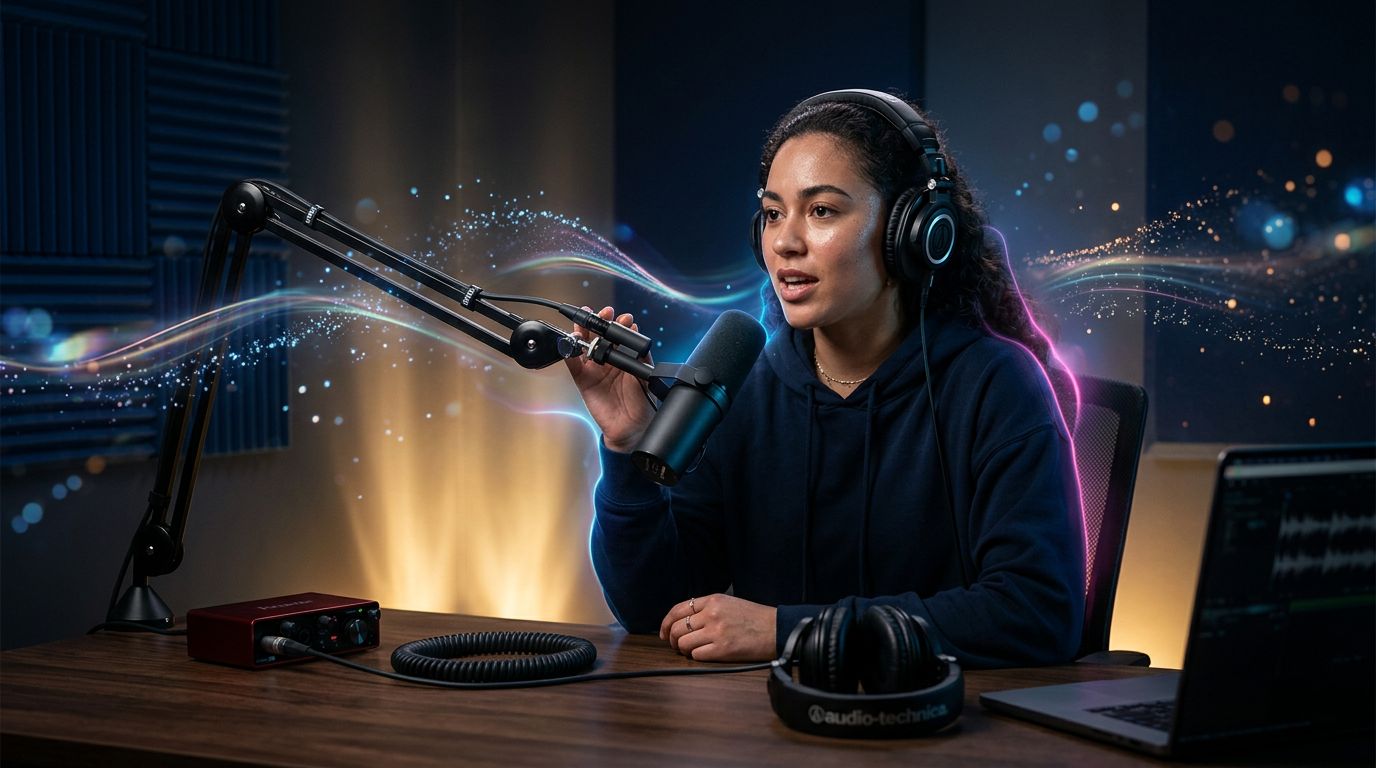
3. Invest in your audio chain before investing in your visual chain. A good microphone and good acoustics have more impact on retention in 2024 than a 4K camera. It’s counterintuitive for many creators. Yet it’s measurable.
The opportunity nobody sees yet
What nobody ever tells you in articles about PiP: this feature creates a massive differentiation opportunity for creators who produce dense, substantive content.
Why? Because the PiP user is someone who chooses to stay with you while doing something else. That’s a strong engagement signal — stronger, in some cases, than a full passive full-screen view.
A Wistia study on video engagement shows that watch duration is a better indicator of perceived value than view count. PiP can extend that duration even for long-form content — provided the content is good.
Creators who will win in this environment aren’t those who produce the shortest, most visual, most impactful content in 3 seconds. They’re the ones who build an audio relationship with their audience. A voice you recognize. A rhythm you appreciate. A density of information you respect.
YouTube Creator Academy data confirms this trend: channels with a high re-listen rate (replays and background listening) have above-average subscription metrics.
Adapt or suffer
YouTube’s PiP mode isn’t just another technical evolution. It’s a symptom of a profound shift in the relationship between individuals and digital content.
Attention is fragmented. It already was. It’s even more so now. And platforms, far from fighting this, are building tools to accommodate that fragmentation.
The real question isn’t “how do I recover full-screen attention?” It’s: “how do I create value in a context of partial attention?”
Creators and marketing teams who answer that question now will build a lead that’s hard to close in 18 months.
You produce video content for your brand or your clients? Editorial management, planning, and adapting your formats to each platform is exactly what Nova-Mind automates — with memory of your editorial guidelines, your clients, and your creative directions. No need to re-explain everything each session. Try Nova-Mind and see how many hours it frees up per week.
Share this article
Social networks
Analyze with AI
Charles Annoni
Front-End Developer and TrainerCharles Annoni has been helping companies with their web development since 2008. He is also a trainer in higher education.