


Apple vs OpenAI: An Empire Lesson for AI Freelancers
Article Summary
📖 9 min readThis article decodes the Apple-OpenAI conflict as a collision of doctrines on control and data. It analyzes how Apple's strategies on AI and privacy offer crucial lessons for freelancers about their dependency on artificial intelligence tools.
Key Points:
- The Apple-OpenAI conflict is not a simple commercial disagreement, but a collision of doctrines on control, data, and user experience.
- Apple's doctrine rests on total ecosystem control and favors on-device data processing to maintain privacy.
- ChatGPT integration into iOS, despite privacy guarantees, represents a major doctrinal first for Apple regarding third-party data access.
- Freelancers and solopreneurs must apply the same questions of control, dependency, data, and ownership to their own relationships with the AI tools they use daily.
- Understanding big tech strategies allows independents to anticipate AI market shifts and better manage their own digital sovereignty.
The Silent War Redefining Consumer AI
15 years of observing tech strategies have taught me one thing: when Apple frowns, the entire industry holds its breath.
The standoff between Apple and OpenAI over ChatGPT’s integration into iOS is not a simple commercial disagreement. It’s a collision of doctrines. Two incompatible worldviews crashing into each other at 300 billion dollars of market capitalization.
And if you’re a freelancer, solopreneur, or digital agency, this conflict concerns you directly. Not because you use an iPhone. Because the same tensions — control, dependency, data, ownership — define your own relationship with the AI tools you adopt every day.
Let’s look at this from a different angle.
The Apple Doctrine: Total Control or Nothing
Apple has never been a pure innovation company. It’s an experience control company. Every pixel, every transition, every sound is orchestrated. The App Store, Lightning (then USB-C forced by Europe), Apple Silicon chips — everything converges toward one goal: keep you in the ecosystem, and keep the ecosystem under Apple’s control.
When Tim Cook announced the partnership with OpenAI to integrate ChatGPT into Siri, Elon Musk’s reaction was spectacular — threatening to ban iPhones from his companies for “security violations.” Anecdotal? No. Revealing.
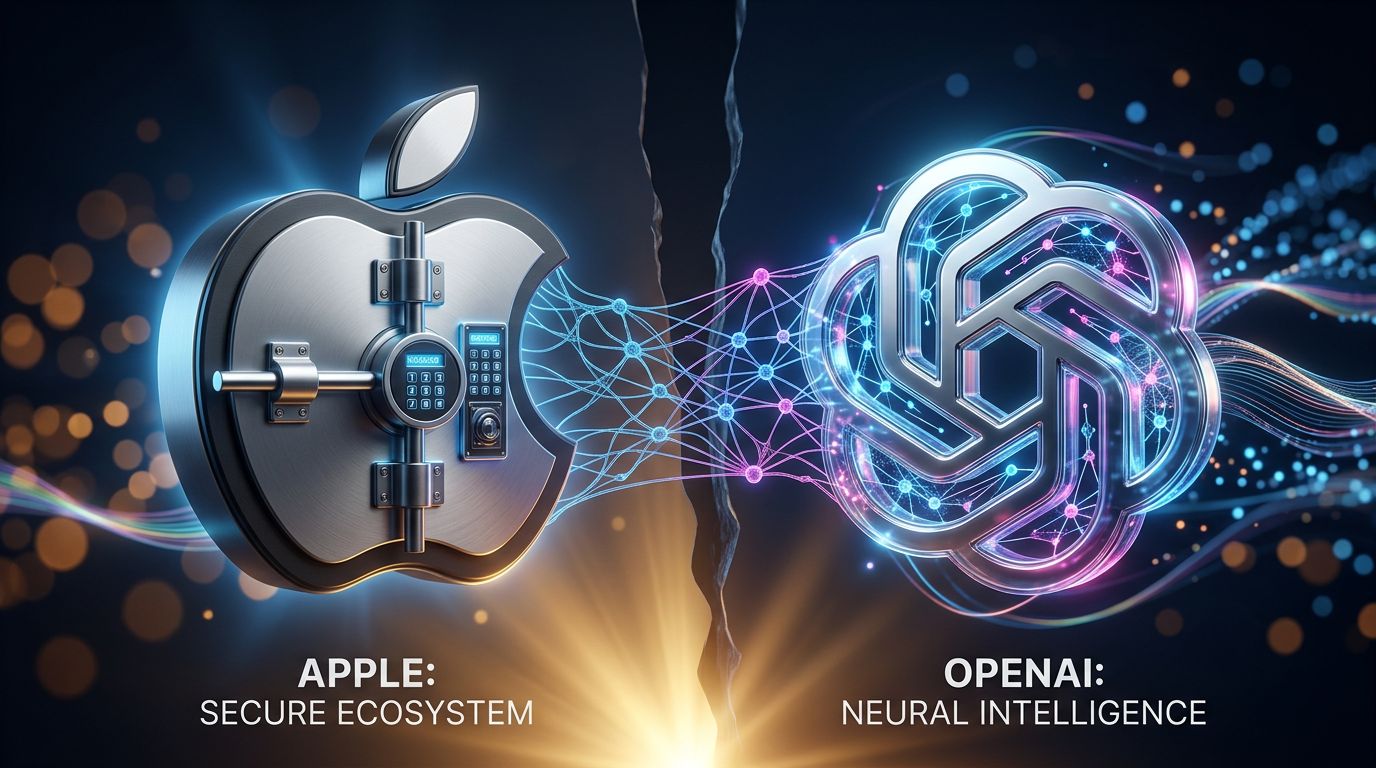
What Musk understood (even if his motivations are debatable) is that Apple is conceding something extraordinary: access to users’ behavioral data to a third party. For Apple, this is a major doctrinal first.
Here’s where it gets interesting: Apple negotiated conditions that allow it not to send queries to OpenAI without explicit user consent. Data stays, as much as possible, on the device via on-device processing. This is the doctrine of privacy as a competitive advantage pushed to its extreme — even in a partnership, Apple imposes its rules.
What This Conflict Reveals About Technological Dependency
My analysis reveals a pattern I also observe among my freelance users: dependency on a single tool is always a position of weakness.
Apple spent 30 years building an ecosystem to never be in this position. And yet, in 2024, under pressure from public opinion and investors about its AI lag, it had to ally with OpenAI. It had to accept a form of dependency — even framed, even controlled.
The result? OpenAI gains access to 1.4 billion active devices. Apple buys time to develop its own models. Both know this agreement is temporary.
“Strategic partnerships in tech are never marriages. They are armed truces.” — Silicon Valley doctrine, unfiltered.
For a freelancer or agency, the lesson is stark: if you’ve built your entire workflow on ChatGPT alone, on Notion alone, on a single tool — you’re in the same position as Apple in 2023. Dependent. Vulnerable to pricing changes, outages, product pivots.
True resilience is architected diversification. Not using 15 random tools — that’s chaos. But a thoughtful stack where no single link is critical.
The Data Battle: Who Owns Your Context?
Here’s what nobody tells you in articles about this Apple-OpenAI partnership: the real battle isn’t about features. It’s about who owns the context.
OpenAI wants to learn from your usage to improve its models. Apple wants that data to stay in its ecosystem. The end user? They are the stake, not the stakeholder.
This conflict micro-reflects something massive: in the AI economy, context is the new intellectual property.
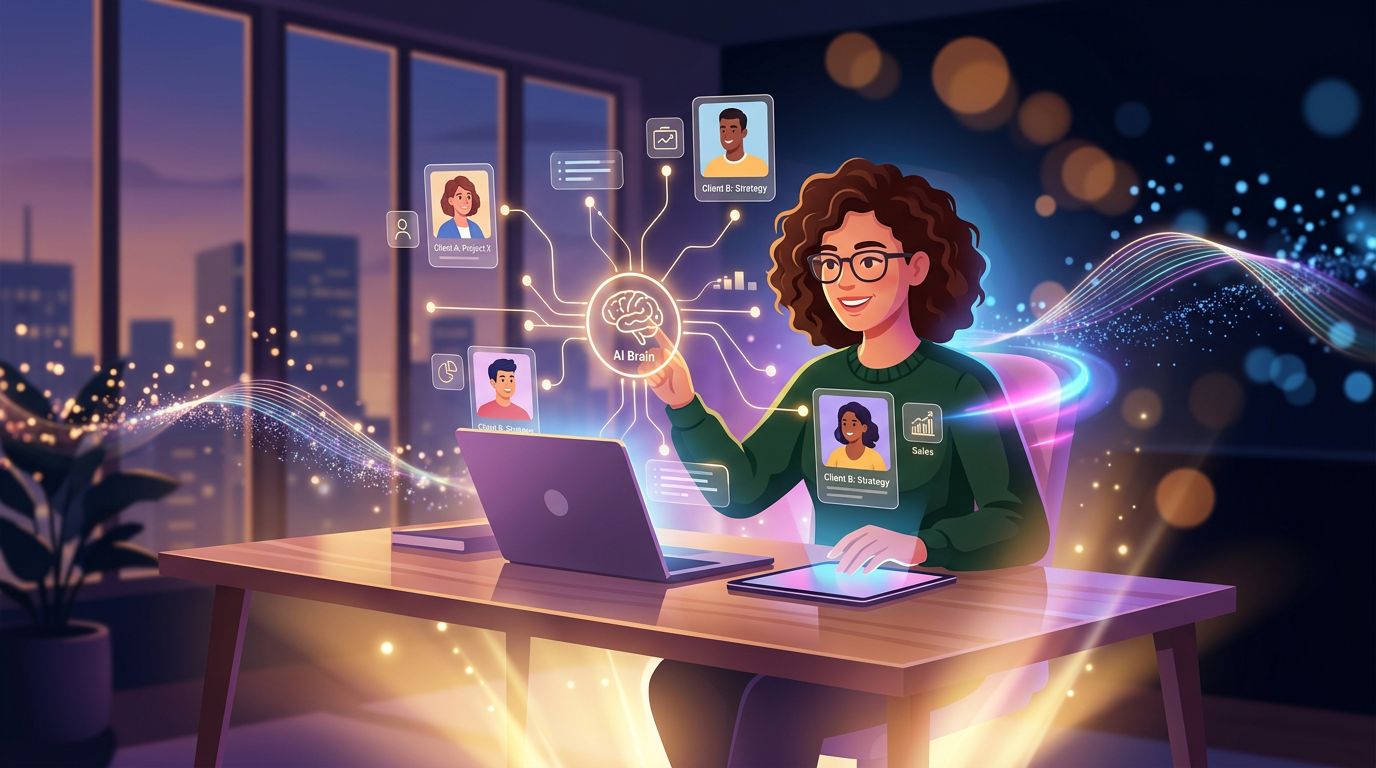
Let’s flip this around. As a freelancer, you’ve accumulated years of context: your clients, their preferences, their project histories, their communication styles. This context has real economic value. If you store it in ChatGPT, it belongs to OpenAI (under standard terms of service). If you store it in Notion, it belongs to Notion.
The question is not philosophical. It’s practical: if your AI tool disappears tomorrow, do you take your context with you?
Three Concrete Lessons for Your AI Stack
My obsession with detail has led me to identify three patterns directly applicable to your daily life as a freelancer or agency.
First lesson: control of experience is worth more than a feature list.
Apple doesn’t have the best voice assistant. It has the most integrated one. Siri is mediocre compared to ChatGPT — and yet billions of users use it because it’s there, in the natural flow of their day. The lesson: the tool you actually use is worth more than the perfect tool you never open. Choose integration over isolated performance.
Second lesson: negotiate your terms, even with giants.
Apple imposed its rules on OpenAI. Not because it’s more technically powerful — but because it controlled distribution. As a freelancer, your “distribution” is your client relationships, your reputation, your access to niche markets. That’s your leverage. Use it to choose tools that respect your data, not platforms that monetize you.
Third lesson: armed truces have expiration dates.
Apple is developing Apple Intelligence. In 18 months, it may no longer need OpenAI. If you build your workflow on a similar partnership — a free tool that will monetize later, a cheap API that will raise its prices — plan your exit before you need it.
The Memory Doctrine: What Apple Refuses to Share with OpenAI
What nobody tells you about the terms of the Apple-OpenAI partnership: Apple categorically refused to give OpenAI access to the full history of Siri conversations. Each request transmitted to ChatGPT is contextualized minimally, anonymized as much as possible.
Why? Because Apple understood before anyone else that memory is the ultimate differentiator.
An assistant that remembers you is infinitely more valuable than a powerful but amnesiac assistant. That’s why Apple jealously keeps this context in its own ecosystem — even if it degrades response quality in the short term.
For freelancers, it’s the same equation. Your AI assistant that forgets everything between sessions? It costs you time. Every morning, you re-contextualize. You re-explain who this client is, what this project is, what this constraint is. This is documented as one of the main frustrations of professional AI users.
Persistent memory is not a luxury. It’s the condition for an AI tool to become a true collaborator.
What This Changes for You, Concretely
After analyzing this conflict from every angle, here’s what I take away for my own practice — and what I recommend you apply starting this week.
Audit your dependency. List your 5 critical AI tools. For each one, answer: if this tool disappears tomorrow, how many days to recover and migrate? If the answer exceeds 3 days, you have a structural risk.
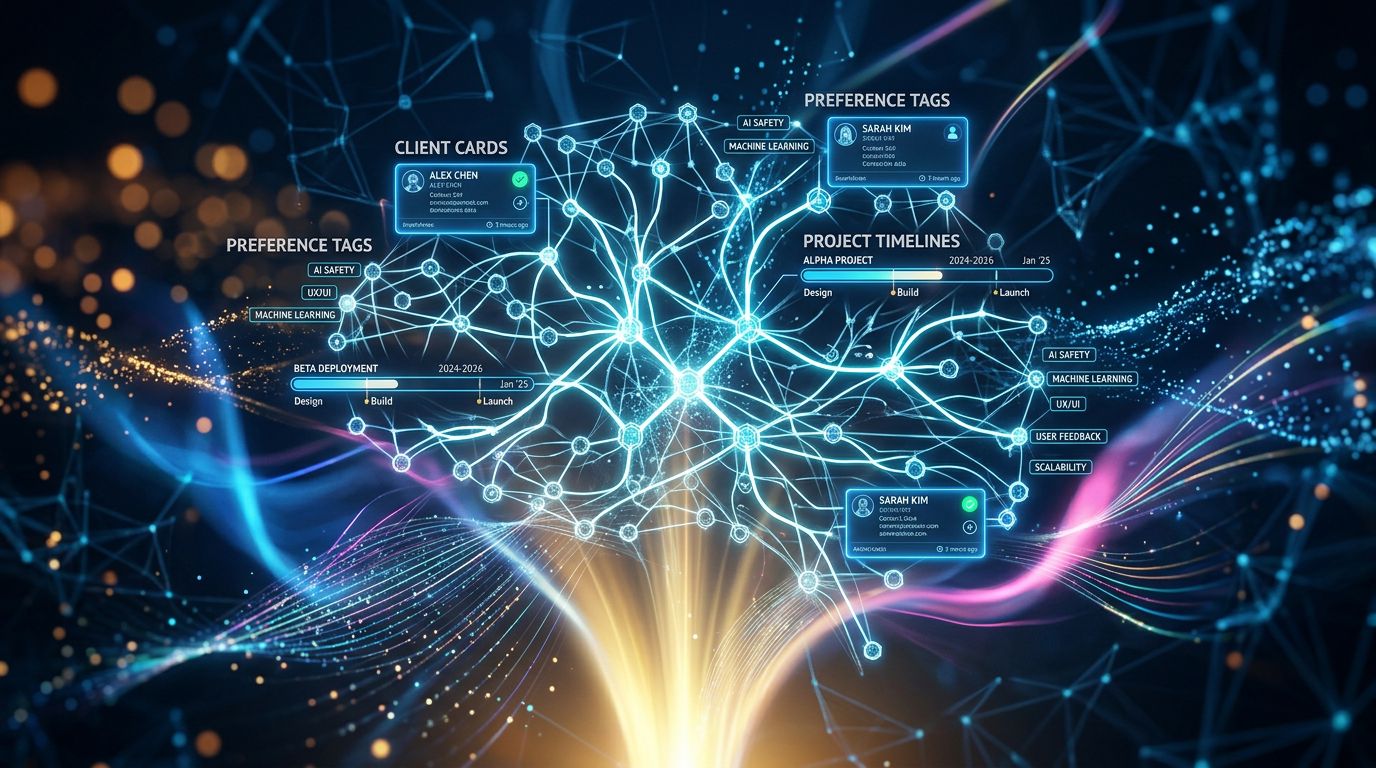
Outsource your context, not your data. Your client history, your preferences, your processes — these must live in a system you control. Not in a SaaS provider’s servers that you don’t own.
Choose tools that work for you between sessions. Passive AI that waits for your queries is so 2022. AI that analyzes your patterns, detects your risks, prepares your briefs while you sleep — that’s what creates real competitive advantage.
“Productivity is not a question of execution speed. It’s a question of how much your stack works without you.” — Nova Stellaris
The Real Lesson from the Apple-OpenAI Conflict
Apple and OpenAI are fighting over something you can decide right now: who controls your working context.
Apple spent 30 years building an ecosystem that allows it to negotiate as an equal with the most valued AI company in the world. You don’t have 30 years. But you have something Apple doesn’t: the agility to choose your stack without a board of directors, without shareholders, without a technological legacy to protect.
Use this advantage. Choose tools that remember. Choose stacks where your data belongs to you. Choose integration over the feature list.
The Apple doctrine — total control of experience, privacy as a differentiator, temporary partnerships never permanent — is not reserved for companies with 3,000 billion in capitalization. It’s a philosophy applicable to your workflow starting tonight.
Want an AI assistant that truly remembers your 47 clients, works for you overnight, and where the data belongs to you? Nova-Mind is built on exactly this doctrine. Persistent memory via pgvector, private data on Supabase, proactive coaching even when you’re offline. Try Nova-Mind starting at €39/month — no bullshit, no re-explaining context every session.
Share this article
Social networks
Analyze with AI
Charles Annoni
Front-End Developer and TrainerCharles Annoni has been helping companies with their web development since 2008. He is also a trainer in higher education.