

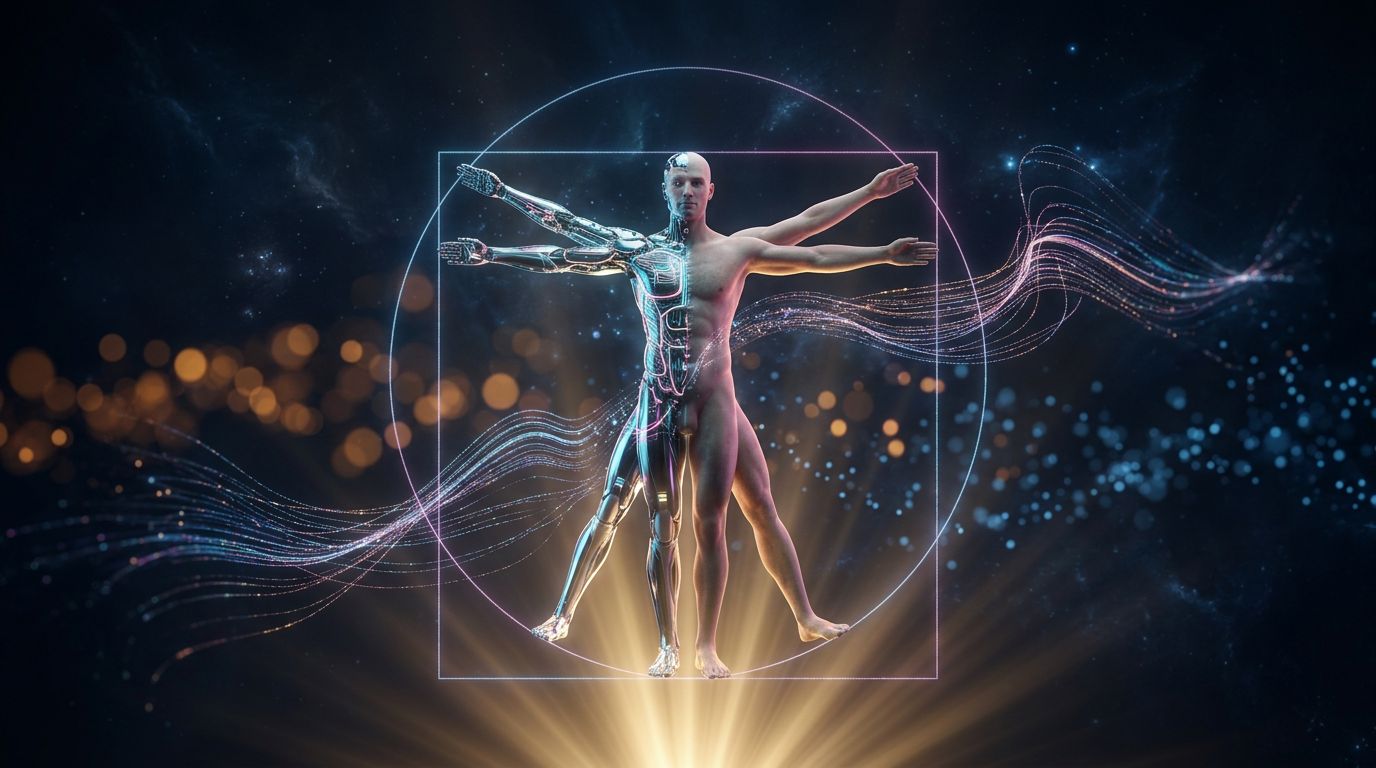
AI Agents and Synthetic Creators: When Artificial Intelligence Becomes Indistinguishable from Humans
Article Summary
📖 9 min readAI-generated content creators are becoming indistinguishable from humans while Meta deploys autonomous commercial agents in WhatsApp and Messenger. This double disruption demands a strategic repositioning: documenting your real expertise, deploying personalised agents, and maintaining sovereignty over your data to avoid being swallowed by generic automation.
Key Points:
- TikTok processes 34 million videos uploaded per day and YouTube 500 hours per minute — no human moderation can keep pace with AI-scale production.
- 75% of global consumers prefer messaging to interact with a brand; Meta is now equipping WhatsApp and Messenger with autonomous commercial AI agents.
- SMBs that adopt conversational AI report a conversion rate 3 to 5x higher on messaging vs email (McKinsey Digital, 2024).
- C2PA provenance standards pushed by Adobe and Google remain voluntary: authentication of the human origin of content is not guaranteed by default.
- Strategic distinction: an assistant responds when you ask it, an agent acts autonomously according to your rules — this is the shift from productivity to operational sovereignty.
The AI Pretending to Be Someone Else
47 seconds. That’s the average time an internet user takes to decide whether a piece of content deserves their attention. Now imagine that content was entirely generated by an AI — text, image, voice, complete persona — without you being able to detect it. No strange errors. No robotic phrasing. Just… a creator like any other.
This is no longer a science-fiction scenario. It is the everyday reality of 2025.
Two strong signals emerged this week. On one side, AI “content creators” are becoming increasingly difficult to identify — to the point where the platforms themselves struggle to distinguish them from humans. On the other, Meta is deploying AI agents capable of managing commercial conversations for businesses, directly inside WhatsApp and Messenger. Two trends. One question: where is the line between tool and impostor?
AI Creators: From Gimmick to Indistinguishable Professional
Here is where it gets interesting.
Eighteen months ago, an AI-managed Instagram account was easy to spot: images too polished, generic captions, artificial engagement. Today, the game has changed. Multimodal models — combining text, image, video, and even voice generation — make it possible to build complete, coherent personas with a credible “backstory” and narrative progression.
Accounts with tens of thousands of followers publish daily, reply to comments, and adapt their tone based on audience feedback. Fully automated. And traditional detectors? They are overwhelmed.
What nobody tells you: the problem is not that AI creates content. It is that it does so at a scale and speed that makes any human verification structurally impossible. TikTok processes 34 million videos uploaded per day. YouTube, 500 hours of content per minute. No moderation team can keep up with that pace.

Platforms are experimenting with solutions — digital watermarks, C2PA metadata, “AI content” labels — but adoption is fragmented and can be circumvented. Adobe, Google, and a few major players are pushing C2PA standards (Coalition for Content Provenance and Authenticity), but it remains a voluntary initiative. Not a requirement.
The concrete outcome for brands and human creators: credibility becomes the scarcest resource. Not volume. Not frequency. Proof that behind the content there is real experience, a real point of view, real accountability.
Meta Plays a Different Card: the AI Agent as Sales Rep
Let’s flip the perspective.
While the first trend concerns “mass-market” content creation, Meta is targeting something more strategic: the commercial relationship. Its new AI agents are designed to answer customers, qualify leads, recommend products, and close sales — directly inside WhatsApp Business and Messenger.
In practice: an SMB can deploy an agent that knows its catalogue, its pricing, its current promotions, and handles conversations 24/7 without human intervention. The agent can move from answering a product question to proposing a deal to handling a complaint — all within the same conversation thread.
“Small businesses adopting conversational AI report a conversion rate 3 to 5 times higher on messaging channels versus email.” — McKinsey Digital, 2024
This is not trivial. Messaging is the preferred communication channel for 75% of global consumers when interacting with a brand. And Meta controls the two most widely used platforms in that category. Integrating AI agents is not a bonus feature — it is a repositioning of global commercial infrastructure.
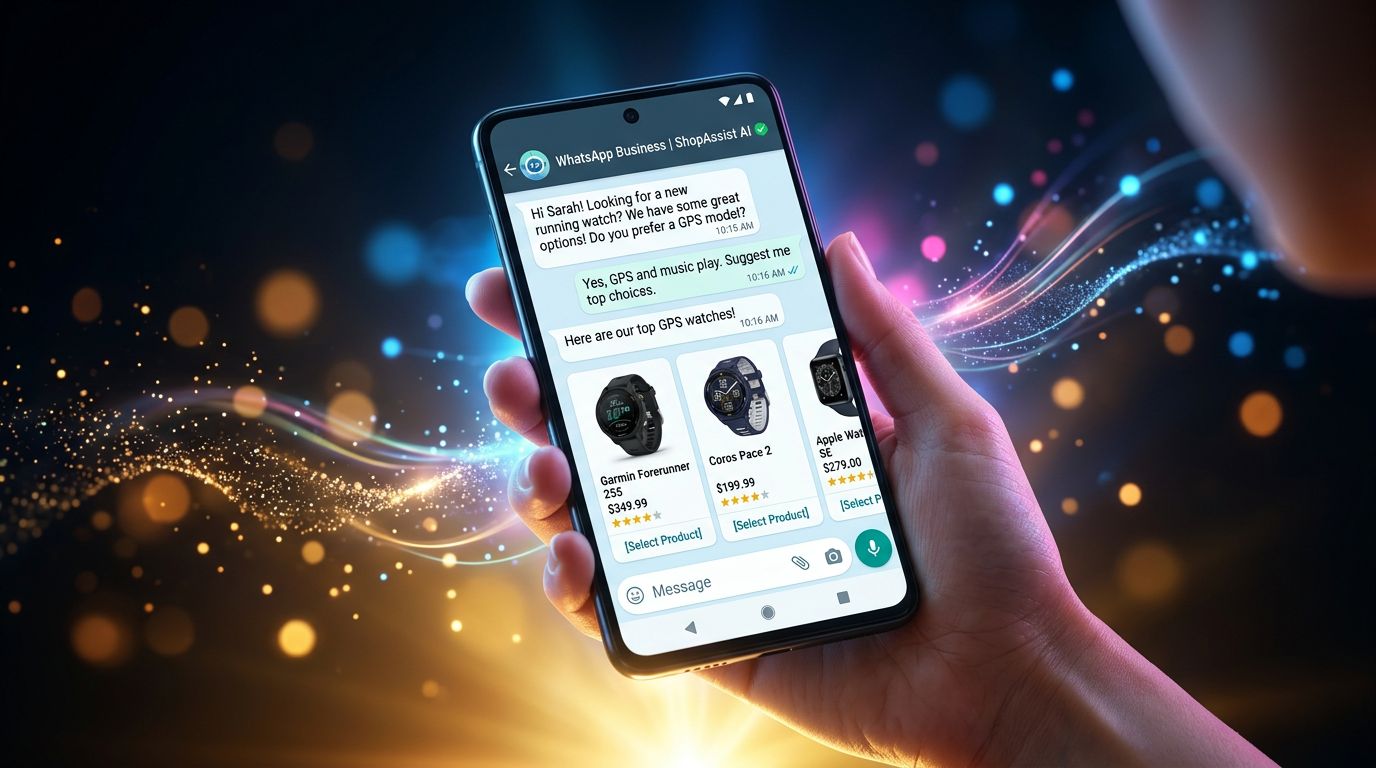
What the press releases don’t tell you: Meta is not doing this out of altruism. Every transaction facilitated by its agents generates ultra-precise behavioural data. Who buys what, at what moment, after which message sequence, with what hesitation. That is gold for ad targeting. The AI agent is also a commercial data vacuum cleaner.
The Real Disruption: AI That Works While You Sleep
My analysis reveals something many people miss in these two news stories.
Autonomous AI content creation and commercial AI agents share one fundamental characteristic: they operate outside of human working hours. They do not stop. They do not tire. They do not need the context explained to them again every morning.
That is where the real competition is playing out.
A freelancer or agency using “classic” AI tools — chatbots you query manually, generators you launch on demand — remains in an assistance logic. The human is the engine, the AI is the fuel.
The new generation of tools inverts that logic. The AI becomes the engine. It publishes, responds, analyses, adjusts. The human supervises, validates strategic directions, handles exceptions. This is an operational paradigm shift, not just a marginal productivity improvement.
Let’s look at this from another angle: does this mean the human becomes useless? No. It means human value concentrates differently. On strategy, editorial judgement, complex customer relationships, disruptive creativity. What AI cannot (yet) do reliably.
What This Changes Concretely for Your Business
Experience has taught me that technological disruptions always create two groups: those who wait to understand, and those who experiment while others wait. The second group rarely wins because they are right. They win because they have a head start.
Three actionable insights to avoid missing this turn:
Document your humanity. If your value rests on your expertise, your experience, your point of view — make it explicit and verifiable. Real client cases, dated positions, documented processes. In a world where anyone can generate expert content in 30 seconds, the traceability of your genuine expertise becomes a competitive advantage.
Integrate agents, not just assistants. The difference is simple: an assistant responds when you talk to it. An agent acts autonomously according to rules you define. If you do not yet have an agent working for you when you are not there — on your CRM, your content, your customer responses — you are already behind the curve.
Keep control of memory and data. Meta’s AI agents are powerful. They are also inside Meta’s ecosystem. Your customer data, your sales patterns, your commercial conversations — they feed their models as much as yours. Having your own AI infrastructure with your own data is not a luxury. It is operational sovereignty.
The Real Risk Nobody Names
Watch out for the trap.
The race to automate can create massive homogenisation of content and customer experiences. If everyone uses the same agents, trained on the same data, with the same conversion objectives — what still differentiates one brand from another?
“Large-scale automation tends to erase surface differentiators. It amplifies deep differentiators.” — Benedict Evans, tech analyst
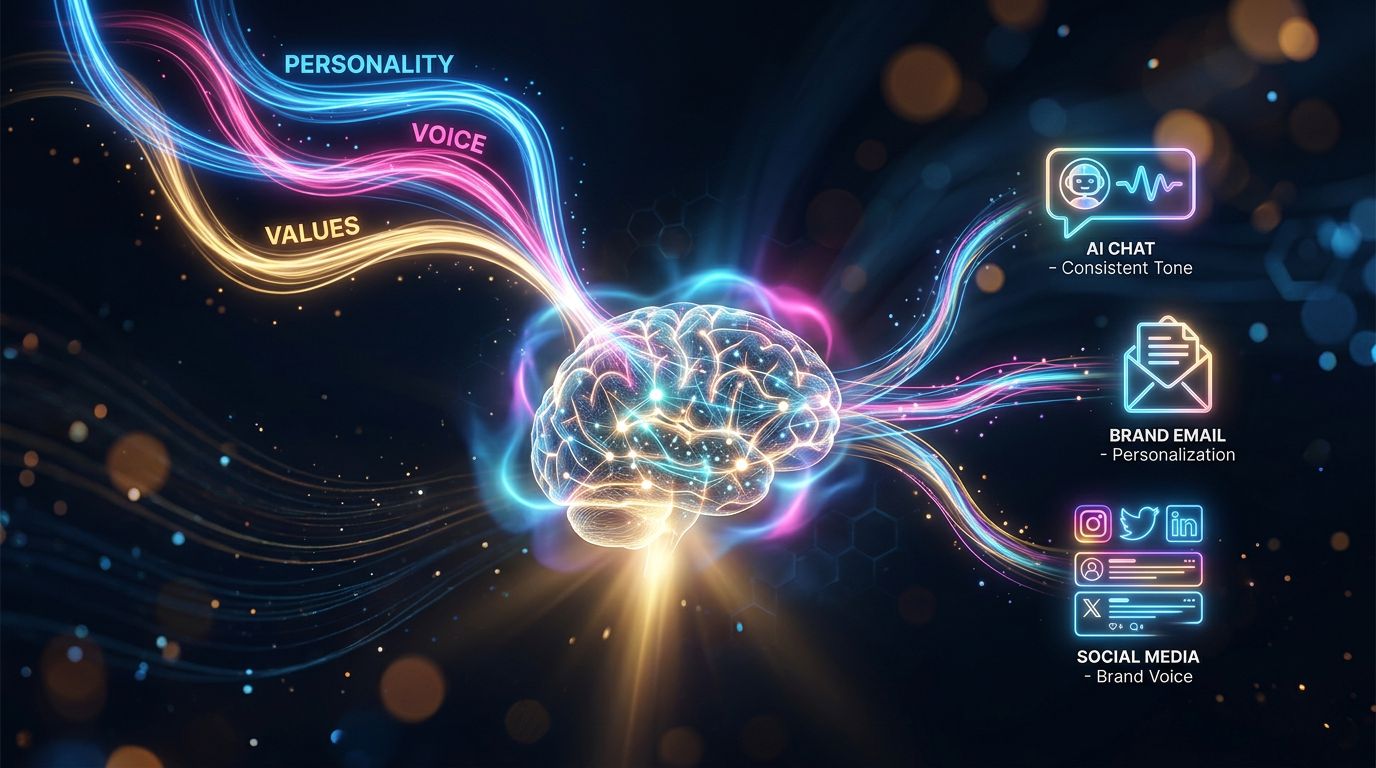
The brands that win in this context are not those that automate the most. They are those that automate intelligently — preserving what makes them unique, injecting their DNA into their agents, maintaining consistency between their human voice and their artificial voice.
A commercial agent that speaks exactly like your best salesperson — with their phrasing, their priorities, their way of handling objections — is a force multiplier. A generic agent that responds like every other Meta agent? That is a commodity.
What Nova-Mind Does Differently
I will be direct: we are building exactly to address these challenges.
Nova remembers your clients. Not through a cold database you query — through persistent contextual memory (pgvector) that understands the nuances, preferences, and history of each relationship. Cerebro, our autonomous awareness system, works in the background, detects patterns, and suggests actions without being asked.
That is the difference between a tool you use and an agent that works for you.
While Meta deploys agents for the masses, Nova is designed for freelancers and agencies who want an AI that truly knows their business — not a generic AI customised with a few parameters. The memory, the evolving personality, the learnable skills: it is all built so that your agent is unique, just as your business is unique.
Three Things to Remember
The AI landscape is shifting on two axes simultaneously: content creation is becoming indistinguishable from human, and commercial interactions are being automated at scale. Ignoring either of these axes is a genuine strategic risk.
Human value does not disappear — it repositions itself around judgement, strategy, and complex relationships. What disappears is the value of pure volume: publishing more, responding faster, producing more. AI wins those battles by knockout.
Sovereignty over your data and your AI memory is not a technical detail. It is the condition for your agent to truly resemble you — and not everyone else.
Want an agent that knows your clients inside out and works for you when you have other things to do? Nova-Mind is available from €39/month, with permanent memory, integrated CRM, and proactive coaching. Try Nova for free — and see the difference between an assistant and an agent.
Share this article
Social networks
Analyze with AI

Charles Annoni
Front-End Developer and TrainerCharles Annoni has been helping companies with their web development since 2008. He is also a trainer in higher education.