


InnovaFeed raises €51 million and lays off 60 people: what this really tells us about today's economy
Article Summary
📖 8 min readInnovaFeed raises €51M and eliminates 60 positions in the same move, illustrating the raw mechanics of industrialisation: capital replaces repetitive labour. The same phenomenon quietly hits freelancers — this article outlines three repositioning strategies (selling context, billing for decisions, integrating automation) to stay on the right side of the disruption.
Key Points:
- InnovaFeed has raised over €300M since its founding and an additional €51M in June 2026 — accompanied by 60 job cuts in the same breath.
- According to Freelance.com (2024), 67% of technical freelancers have seen at least one client reduce their external service budget after adopting AI tools.
- MIT Sloan Management Review estimates a +40% average productivity gain for workers who collaborate with AI — provided they move up the cognitive complexity ladder.
- Three concrete repositioning moves: sell context (not deliverables), bill for the decision (not the time), integrate automation into your own offering.
- The R&D → industrialisation phase transition happens on the freelance side too, gradually, client by client — not as a single spectacular event.
Growth that lays off — welcome to the industrial paradox
€51 million raised. 60 positions eliminated. The same month.
If that sentence sounds contradictory, that’s because it is. InnovaFeed, the French startup specialising in insect proteins, has just illustrated with rare brutality what large-scale industrialisation actually does to human teams. You raise to automate. You automate to reduce headcount. And the people who built the company receive their redundancy notice the same week as the triumphant press release.
This is not an accident. It is a model.
And if you are a freelancer, solopreneur, or head of a small agency, this model concerns you directly — even if you don’t raise insects.
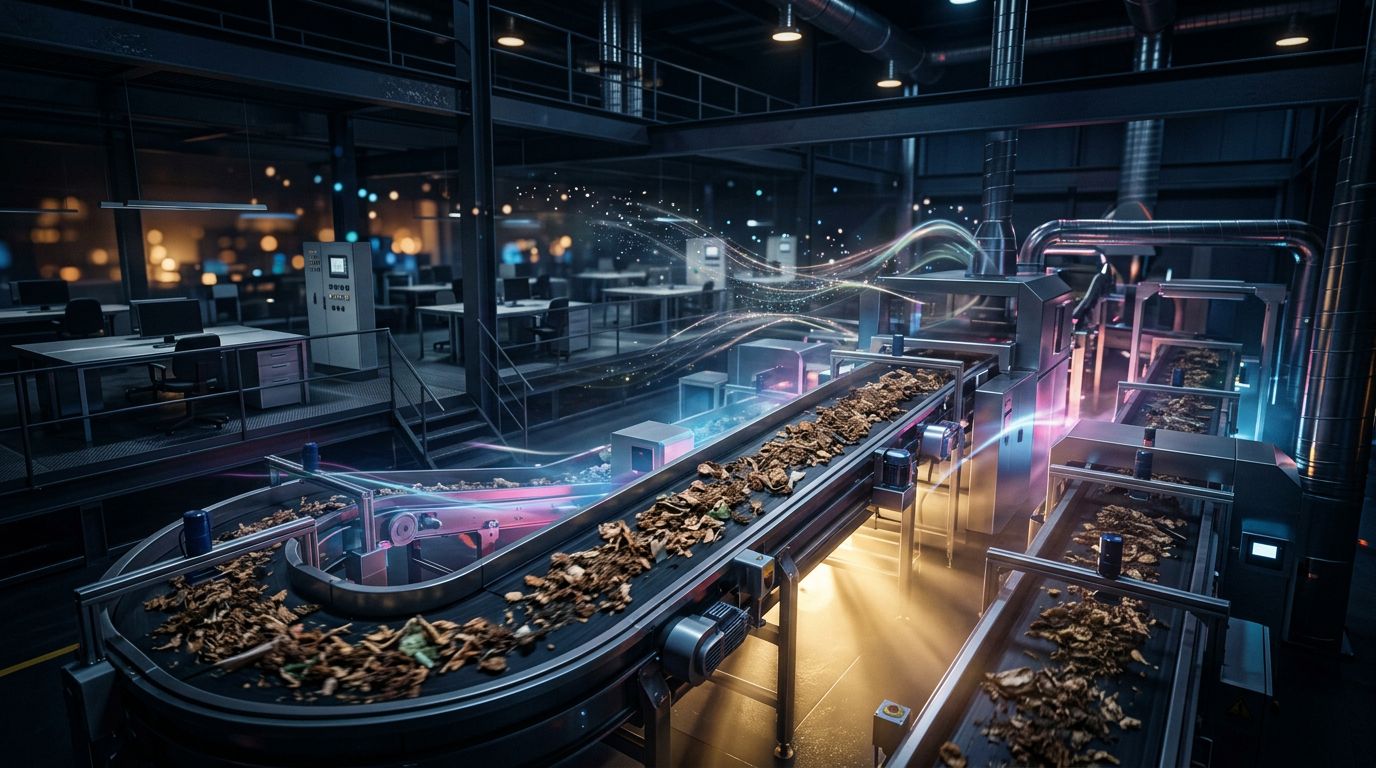
What InnovaFeed reveals about the mechanics of scale
InnovaFeed produces insect meal from the black soldier fly (Hermetia illucens). It is a serious technology, driven by real stakes — food sovereignty, sustainability, alternatives to conventional animal proteins. The startup has raised more than €300 million since its founding. It is considered one of the flagships of French deeptech.
So why lay off 60 people after a new massive fundraise?
The answer is in the question. Because the fundraise is massive. At this stage of development, investors are no longer injecting capital to hire — they are injecting to industrialise. And industrialisation, by definition, replaces repetitive human labour with machines that don’t sleep, don’t get sick, and don’t ask for raises.
What press releases never tell you: every euro raised in the industrialisation phase is potentially a job eliminated. Not out of malice. Out of pure economic logic.
“The growth of large tech companies has often been built on reducing the marginal cost of human labour.” — McKinsey report on automation, 2023
The trap small structures fall into
Here’s where it gets interesting for you.
The natural reflex when you see this kind of news is to tell yourself: “This doesn’t concern me — I’m a freelancer / I have a 5-person agency / I don’t raise funds.” Wrong. The InnovaFeed phenomenon is a concentrated, visible version of a dynamic operating at every scale.
Let’s look at the concrete numbers. According to a Freelance.com study published in 2024, 67% of technical freelancers have seen at least one of their clients reduce their external service budget following the adoption of AI tools. Not because the work is lower quality. Because the client has internalised — or automated — what they used to pay you to do.
It’s the same mechanism as InnovaFeed, at a different scale.
The fundraise is the AI for your client. Capital allows the purchase of tools that replace external labour. And if you are that external labour, you are in the same position as InnovaFeed’s 60 employees — except you don’t even have the right to a redundancy package.

Flipping the situation: what freelancers can learn from this model
Enough diagnosis. Let’s move to what matters.
If industrialisation destroys positions that perform repetitive tasks at high cost, the logical conclusion is simple: stop selling repetitive tasks at high cost.
This is not new advice. But what the InnovaFeed situation makes urgent is the speed at which the profitability threshold for automatable tasks is falling. What was “complex and requires a human expert” in 2022 is often “manageable by a well-configured AI agent” in 2025.
My analysis reveals three concrete repositioning moves for independents who want to stay in the game:
Sell context, not deliverables
A client doesn’t pay you to write an article — they can have a tool for that. They pay you to understand their market, their customers, their regulatory constraints, their brand voice, and produce something that AI alone won’t generate without 6 hours of prompt engineering. Your value lies in accumulated knowledge, not execution.
Bill for the decision, not the time
The hourly rate is the billing format most vulnerable to automation. If you charge €80/h to do something a tool will do in 10 minutes, you have a problem. If you charge €2,000 for a strategic recommendation based on 5 years of sector experience, you are selling something the machine cannot yet replicate.
Integrate automation into your own offering
This is the most powerful reversal. Instead of being subject to automation, become the person who implements it for your clients. The freelancers and agencies that survive — and thrive — in this context are those who master AI tools and integrate them into their deliverables. You no longer deliver an article: you deliver an automated content pipeline. You no longer deliver an analysis: you deliver a dashboard that updates itself.
“Workers who collaborate with AI gain an average of 40% additional productivity — provided they refocus their value on high cognitive-complexity tasks.” — MIT Sloan Management Review, 2024
The real lesson from InnovaFeed for solopreneurs
The InnovaFeed story is not a story of evil investors and good employees sacrificed. It is a story of phase transition. A startup moving from R&D to industrialisation fundamentally changes its nature — and the profiles it needs change with it.
What nobody ever tells you is that this phase transition happens to freelancers too. Not in a single fundraise. Gradually, silently, client by client.
The question is not “will AI take my job?” The question is: “What work do I do that still deserves to be done by a human — and how do I make that clearly visible to my clients?”
Having analysed dozens of freelance profiles going through repositioning over the past two years, I observe a clear pattern: those who succeed don’t resist automation. They absorb it. They use AI tools to multiply their production capacity, and they reinvest the time saved into what machines don’t do — relationships, advice, high-value creativity.

Three concrete actions to take this week
No more theory. Here is what matters:
1. Audit your current deliverables. For every service you sell, ask yourself: could a well-equipped client with AI tools do this without me in 18 months? If the answer is yes, you have 18 months to reposition that service or automate it yourself to sell it differently.
2. Document your client context. Your real value lies in what you know about your clients — their history, their constraints, their goals. This knowledge must be organised, searchable, and usable to produce faster and better. A CRM with semantic memory is no longer a luxury: it is survival infrastructure.
3. Test an automation tool in your workflow this week. Not to replace your work. To understand what your clients see when they look at these tools. You cannot advise on what you haven’t practised.
What this changes for you, right now
InnovaFeed raises €51 million and lays off 60 people. The press reports on the paradox. In six months, everyone will have forgotten.
Except the 60 people concerned. And except the freelancers who understood the signal.
Industrialisation is not the enemy of independents. It is the enemy of independents who pretend nothing is changing. For those who adapt — who master the tools, who sell context and decision-making, who integrate automation into their own offering — it is a real opportunity.
The market is reorganising itself. The question is which side of that reorganisation you want to be on.
Want an AI assistant that truly knows your clients, remembers every project, and works for you even while you sleep? That’s exactly what Nova-Mind does — permanent memory, integrated CRM, automated content pipeline. Discover Nova-Mind from €39/month and stop re-explaining your context every session.
Share this article
Social networks
Analyze with AI

Charles Annoni
Front-End Developer and TrainerCharles Annoni has been helping companies with their web development since 2008. He is also a trainer in higher education.