

AI in courtrooms and energy for data centers: the two faces of a revolution running out of control
Article Summary
📖 9 min readAI is infiltrating courtrooms through invented legal citations, and inflating the global energy bill of data centers. In parallel, AI-driven virtual power plants are emerging as a response to that very energy crisis — illustrating a loop where technology simultaneously creates and solves its own problems.
Key Points:
- American lawyers submitted briefs containing case citations entirely fabricated by ChatGPT, resulting in real judicial sanctions.
- The global AI-related litigation market is estimated at $47 billion by 2028.
- A hyperscale data center continuously consumes between 100 and 500 MW — equivalent to a medium-sized city.
- AI-driven virtual power plants (VPPs) aggregate distributed energy sources and respond to demand peaks in under one second.
- 'Carbon-aware computing' can reduce the footprint of batch workloads by 30% without changing a single line of business code.
When AI generates its own problems
$47 billion. That’s the estimated size of the global AI litigation market by 2028. A figure that would have seemed absurd three years ago. Today, it’s almost conservative.
The technology that was supposed to simplify everything is creating an entirely new category of problems. Lawsuits generated by AI itself. Data centers consuming the electrical equivalent of entire cities. And in parallel — because the universe has a sense of irony — June 2026 delivers an exceptional sky, as if to remind us that some phenomena still work without servers.
Here is what this convergence of trends reveals. And why it concerns you directly, even if you don’t work in tech.
AI-generated lawsuits: a bug or a feature?
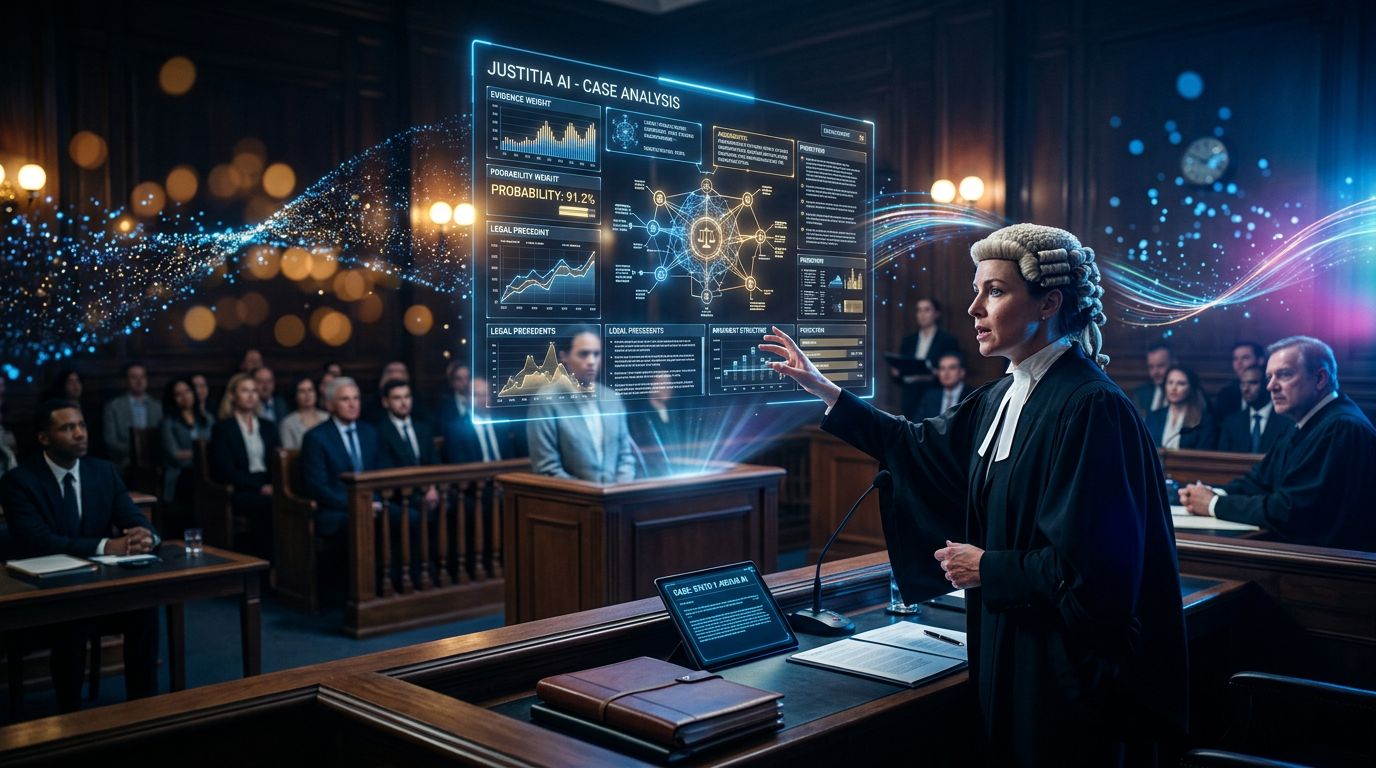
Let’s flip the situation. We assumed AI would mainly cause problems around copyright, deepfakes, and algorithmic bias. Human problems, in essence. But now law firms are using LLMs to generate legal briefs — and those briefs are landing in real courtrooms.
The most documented case: American lawyers who submitted briefs containing case law citations entirely fabricated by ChatGPT. Rulings that never existed. Real judges. Real sanctions.
This is not a technology problem. It’s a misplaced trust problem.
Experience has taught me one thing about AI tools: they are extraordinarily confident, even when they hallucinate. The difference between a useful AI tool and a dangerous one is the presence or absence of a downstream verification system. Not from the AI. From a human.
What changes in 2026 is scale. Law firms using AI for legal research now number in the thousands. So do the potential errors. And the law — unlike code — isn’t easily debugged once it’s in production.
Virtual power plants: when data centers become both the problem and the solution
Here’s where it gets interesting.
The data centers running all these AI models consume a frankly indecent amount of energy. Microsoft, Google, Amazon — they’re all building nuclear reactors or signing PPAs (Power Purchase Agreements) with wind farms to fuel their infrastructures. The problem is massive, documented, and accelerating.
But an emerging trend is drawing attention: virtual power plants (VPPs).
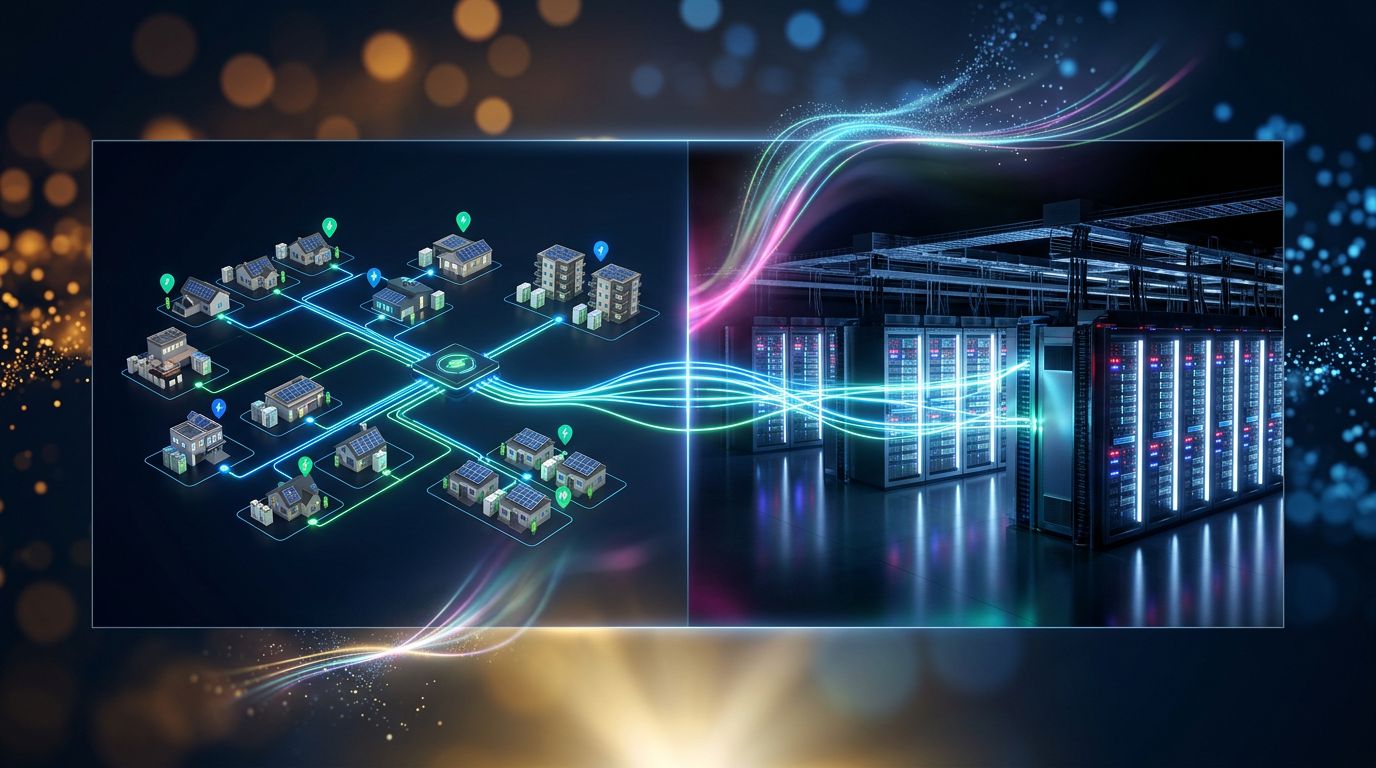
The concept is counterintuitive. Instead of building more generation capacity, you aggregate thousands of small distributed energy sources — solar panels, storage batteries, electric vehicles — to create a “virtual” plant managed by AI. This plant can respond to demand peaks in real time, stabilize the grid, and potentially supply data centers on a priority basis during off-peak hours.
A few figures to ground this in reality:
- A hyperscale data center continuously consumes between 100 and 500 MW
- A well-designed VPP can aggregate between 50 and 200 MW of flexible capacity
- Response time of an AI-driven VPP: under one second
AI consumes energy. AI optimizes energy production. The snake eats its own tail — intelligently.
What articles on AI’s energy consumption rarely tell you: the problem isn’t just the quantity of energy consumed, it’s the timing of that consumption. A model running massive inference at 2 p.m. on a heatwave day is catastrophic for the grid. That same model running at 3 a.m. on stored solar energy is a different story entirely.
VPPs are the infrastructure answer to this timing problem. And this is precisely where AI becomes its own solution — by intelligently managing when and how it consumes.
What these two trends have in common
My attention to detail reveals a common pattern between AI lawsuits and virtual power plants: in both cases, AI creates a problem at a scale only it can manage.
Legal hallucinations? AI can also be used to detect dubious citations in briefs. Automated legal source verification tools are beginning to emerge — Casetext, Harvey.ai — precisely to counter the errors of generalist LLMs.
The energy consumption of data centers? AI optimization algorithms are the only tools capable of handling the complexity of a distributed electrical grid at a regional scale.
AI problem. AI solution. This is the loop we are entering.
This isn’t a criticism. It’s an important structural observation for anyone building products or workflows around AI. Technological dependency creates its own antibodies — but only if they are deliberately designed.
The June 2026 sky: a reminder that some things work without GPUs
Let’s shift perspective entirely.
While legal experts debate GPT-4 hallucinations and engineers calculate the PUE (Power Usage Effectiveness) of their data centers, the June 2026 sky is preparing something quite remarkable — and it requires no subscription.
The June planetary conjunction. Venus, Jupiter, and Saturn align in a configuration visible to the naked eye just after nightfall. This type of planetary alignment isn’t particularly rare, but the clarity and angular proximity of this particular configuration make it photographable even with a recent smartphone.
The June full Moon — the “Strawberry Moon” in Native American tradition — falls mid-month. Sitting particularly low on the horizon, it delivers that giant-moon effect that night photographers chase.
Shooting stars. The June Bootids, a discreet but regular meteor shower, offer a few dozen meteors per hour under good observing conditions.
Why mention any of this in an article about AI and energy? Because this juxtaposition says something important.
We are building systems of ever-greater complexity — energy-hungry, potentially litigious. And meanwhile, one of the most striking spectacles of the year plays out for free, with no latency, no hallucinations, and no electricity bill.
This isn’t an argument against AI. It’s an argument for perspective.
Three actionable insights for navigating this period
My expert advice, after months of building AI workflows that actually hold up:
1. Systematically verify critical outputs
If you use AI for tasks with real consequences — legal, financial, medical — build in a non-negotiable human verification step. Not because AI is bad. Because it is confident even when it is wrong. That is the fundamental bug of current LLMs.
2. Think about temporal footprint, not just carbon footprint
If you manage infrastructure or make cloud purchasing decisions, ask your providers about their “carbon-aware computing” policies. Azure, Google Cloud, and AWS all offer APIs that allow you to shift non-critical workloads to low-carbon windows. -30% footprint for batch tasks, without changing a single line of business code.
3. Distinguish generalist AI tools from specialized AI tools
The lawyer using ChatGPT for legal research is making the same mistake as a surgeon using Google Maps to navigate an operating room. Both are remarkable tools. Neither was built for that purpose. AI specialization — contextual memory, narrow domain expertise, integrated verification — is what transforms a gadget into a reliable professional tool.

The real question behind all of this
Here’s where it gets uncomfortable.
We talk a lot about AI’s impact on employment, creativity, and democracy. But the 2026 debate — the one that will shape the next five years — is more fundamental: who owns responsibility for AI errors?
When an LLM invents a legal precedent and a lawyer submits it, who is responsible? The lawyer? The model provider? The company that sold the “legal” tool? When a data center consumes the equivalent of a mid-sized city, who pays the real cost — environmental, social, infrastructural?
These questions don’t yet have stable answers. Regulators are catching up. Case law is being built case by case. Energy standards for AI are still embryonic.
This regulatory void is both a risk and an opportunity. For builders who anticipate, for companies building responsible practices now — before it becomes mandatory.
Like the June sky: the planets move according to immutable laws. You don’t change them. You learn to read them.
Go further
AI generates problems at a speed only AI can absorb. That is the reality of 2026. Lawsuits, energy, infrastructural dependency — the stakes are real and accelerating.
But the answer isn’t to slow down. It’s to build better.
If you want an AI assistant that doesn’t invent case law for you, that genuinely remembers your clients, and that works for you even while you’re watching shooting stars — Nova-Mind is built exactly for that. Permanent memory, persistent context, zero bullshit.
The June sky won’t wait. Neither will your workflows.
Share this article
Social networks
Analyze with AI

Charles Annoni
Front-End Developer and TrainerCharles Annoni has been helping companies with their web development since 2008. He is also a trainer in higher education.