

Meta and marketing myopia: reinventing engagement
Article Summary
📖 10 min readThe article explores how Meta's current crisis is symptomatic of marketing myopia — where optimizing for traffic metrics has replaced the pursuit of authentic user engagement. It draws lessons from this crisis to guide marketers toward more sustainable digital strategies, centered on real value for the user.
Key Points:
- Theodore Levitt's "marketing myopia" — prioritizing the product over the customer's actual need — explains Meta's growing disconnect from its users.
- Optimizing for time-on-platform without considering experience quality leads to captivity, not genuine engagement.
- Platforms that fuel hollow virality and polarization are watching their users migrate toward more satisfying experiences.
- Understanding what users are truly seeking online — beyond traffic metrics — is critical for a sustainable digital strategy.
- Analyzing gamification mechanics uncovers concrete ways to create online interactions that generate real value and connection.
When giants stumble, marketers learn
4.7 billion monthly active users. Record ad revenues. And yet, Meta is going through an identity crisis that traffic numbers can no longer hide. Paradoxical? Not really. It’s actually the textbook symptom of a condition Theodore Levitt diagnosed back in 1960: marketing myopia.
Here’s where it gets interesting: Meta’s traffic data doesn’t tell a story of decline — it tells a story of disconnection. There’s a widening gap between a platform that optimizes for metrics rather than value, and users who are looking for genuine engagement. Meanwhile, an analysis of gamification mechanics reveals exactly what people want when they scroll, play, or interact online.
Read together, these two signals draw a valuable map for any digital marketer who wants to build something that lasts.
Meta’s marketing myopia: a brutal case study
Levitt defined marketing myopia as focusing on the product rather than the customer’s real need. American railroads thought they were selling trains. They were actually selling transportation. When planes arrived, they never saw disruption coming.
Meta long believed it was selling social networks. In reality, people were looking for connection, discovery, and belonging.
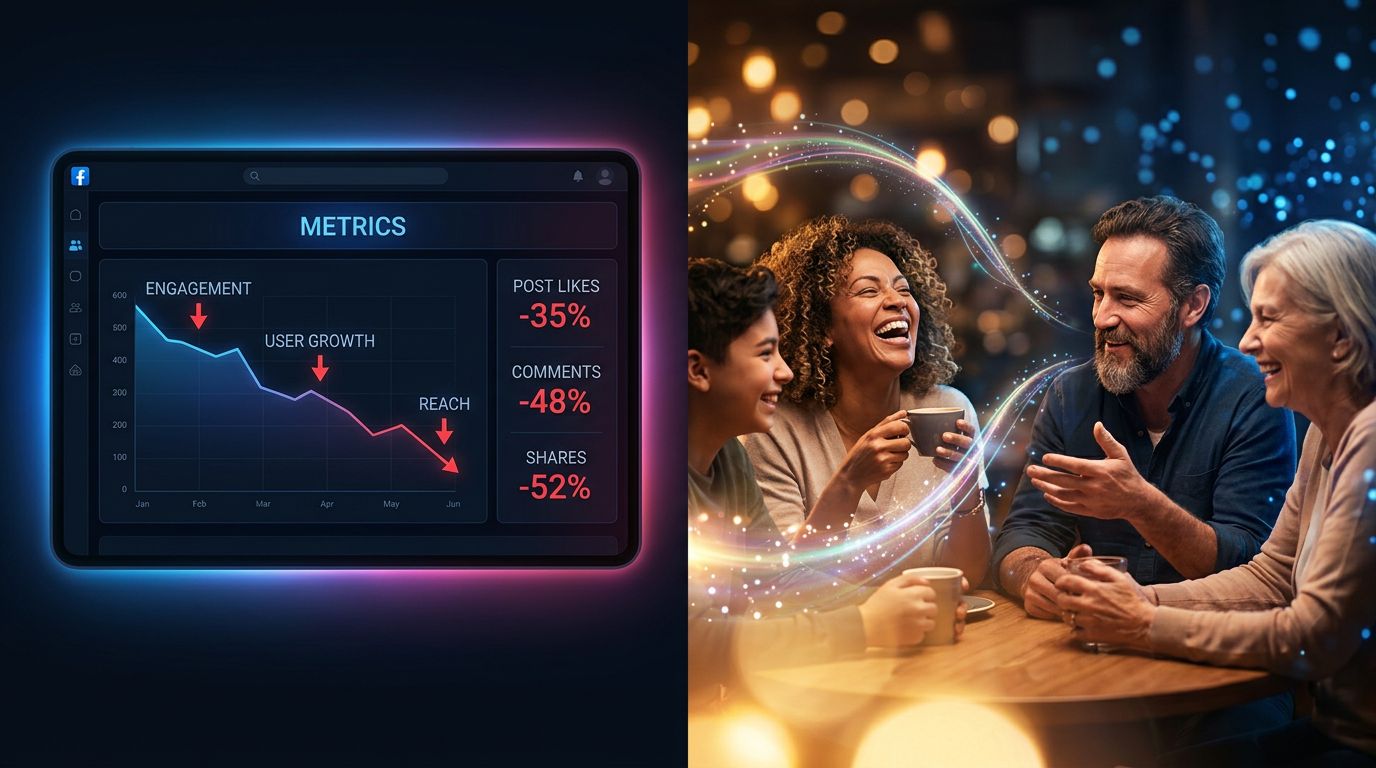
The problem? Facebook optimized for time spent, not experience quality. The algorithm favored content that triggered strong reactions — outrage, polarization, hollow virality. The result: users spend time on the platform, but often leave more frustrated than satisfied. That’s not engagement. That’s captivity.
Traffic data reveals this drift. Young users are abandoning Facebook for TikTok, Instagram is losing ground to YouTube Shorts, and Threads is struggling to find its purpose in the shadow of X. Every Meta product launch looks more like playing catch-up with competitors than a clear vision of what users actually want.
What nobody tells you: having billions of users doesn’t protect you from myopia. It can actually make it worse. Scale creates inertia. Inertia creates blind spots.
What gamification reveals about real engagement
Let’s flip the script. If Meta illustrates what doesn’t work, gamification shows what does — and why.
After analyzing dozens of game mechanics applied to marketing, one pattern emerges consistently. Lasting engagement rests on three pillars that traditional social platforms have progressively sacrificed at the altar of rapid growth.
Perceived progression
The games that retain players aren’t necessarily the most beautiful or most complex. They’re the ones that give a constant sense of forward movement. Every action has a visible consequence. The user knows where they stand, where they’re headed, and why it’s worth continuing.
In digital marketing, this is exactly what most brands get wrong. You publish, you hope, you count likes. But the user perceives no progression in their relationship with the brand. They consume content the way they watch cars pass by.
Real agency
Games that create healthy engagement — a term worth handling carefully — are those where the player’s choices have a genuine impact on the experience. It’s not an illusion of control. It’s actual control.
Meta did the opposite: the algorithm decides what you see. You have no real grip on your feed. This dispossession is precisely what drives users toward platforms that are more configurable and more transparent.
Authentic social reward
Research on engagement in multiplayer games is unambiguous: social reward — being recognized by peers, contributing to a community, earning genuine status — generates far deeper engagement than individual reward.
Duolingo understood this. Their league system, shared streaks, and friend leaderboards transform solitary learning into a social experience. Their retention rate is unmatched in their sector.
“People don’t buy products, they buy better versions of themselves.” — Michael Schrage, MIT Sloan School of Management

The real problem: confusing metrics with value
My attention to detail reveals something I see constantly in digital strategies: the confusion between what’s easy to measure and what actually matters.
Impressions, clicks, time-on-page — these are proxy metrics. They signal something, but they don’t measure the real value created for the user. Meta pushed these proxy metrics to an extreme. The result: impressive numbers and a user experience that keeps degrading.
Gamification falls into the same trap when it’s poorly applied. Arbitrary badges, meaningless points, leaderboards that reflect no real skill — that’s cosmetic gamification. It generates an initial engagement spike, then a sharp drop-off.
What nobody tells you at marketing conferences: the difference between a game mechanic that retains users and one that drives them away comes down to one question. Does the user feel more capable, more connected, or better informed after the interaction? If the answer is no, you’ve built a distraction, not engagement.
Here’s another angle: the platforms winning in 2024 aren’t the ones with the most features. They’re the ones with the clearest vision of the transformation they create in their users’ lives.
Three actionable insights to avoid myopia
If I were your digital strategist for the next six months, here’s what I’d put in place immediately.
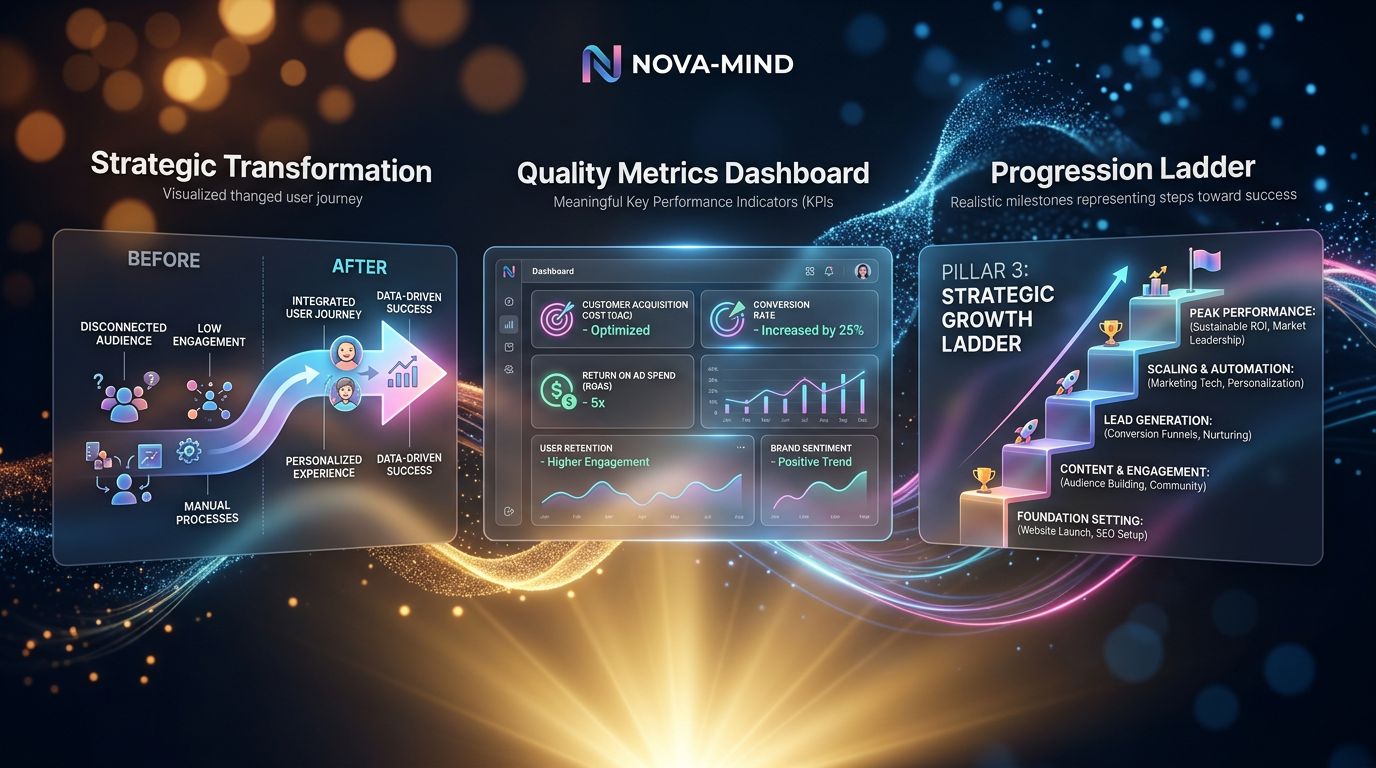
Define the transformation, not the product. Before publishing your next piece of content or launching your next campaign, ask yourself: what’s different in my user’s life before versus after this interaction? If you can’t answer precisely, start over. Meta hasn’t answered this question in years — and it shows.
Measure quality engagement, not volume. The user return rate over a 90-day period tells you more than a campaign’s click-through rate. A community’s NPS reveals more than a follower count. Pick two or three metrics that genuinely reflect the value you’re creating, and ignore the rest.
Embed perceived progression into every touchpoint. An onboarding flow that clearly shows users where they stand. A loyalty program where tiers carry real meaning. Content that adapts to the audience’s level of knowledge. These aren’t details — they’re the architecture of lasting engagement.
What’s really at stake for digital marketers
Experience has taught me that crises at major platforms are moments of clarity for practitioners. When Facebook falters, marketers who had bet everything on its organic reach discover their dependency the hard way. When TikTok rises, those who understand the deep mechanics of engagement — not just the short video format — adapt quickly.
The lesson from Meta isn’t “avoid big platforms.” It’s: never delegate your engagement strategy to a third party’s algorithm.
The lesson from gamification isn’t “add badges to your website.” It’s: understand what truly motivates your users and build around that.
Both lessons converge on the same imperative: a deep knowledge of your audience. Not marketing personas built in a conference room. A real understanding of what your users are trying to accomplish, what frustrates them, and how your product or service fits into that equation.
“It’s not the customer who must adapt to the product. It’s the product that must adapt to the transformation the customer wants to live.” — adapted from Clayton Christensen, The Innovator’s Dilemma
This is precisely why I built Nova-Mind with persistent memory for every client and project. Not to impress with technology. Because an assistant that forgets the context of your clients after 24 hours is exactly marketing myopia applied to AI. You deserve a tool that understands your audience as well as you do.
Build for engagement, not for the metric
Meta’s identity crisis and the lessons of gamification tell the same story. Strategies that optimize for short-term metrics at the expense of user value always end up working against their creators.
Real engagement — the kind that drives retention, referrals, and sustainable revenue — comes from a deep understanding of what people are truly looking for. Not what they click. What they want to accomplish.
Three questions to ask yourself this week:
What concrete transformation does your content or product create in your users’ lives? Which metrics actually measure that transformation — not just traffic? And what signals will warn you that you’re sliding toward marketing myopia, before your traffic numbers collapse?
If you want to go deeper on these topics, Nir Eyal’s work on behavioral habits and BJ Fogg’s research on behavior design are solid resources. Not abstract theory — frameworks you can apply directly.
Tomorrow’s digital marketing won’t be won with ad budgets. It will be won through understanding. And no algorithm can do that for you.
Working on your engagement strategy and wasting time re-explaining your clients’ context at every AI session? Nova-Mind remembers everything — clients, projects, preferences — and works for you even when you’re offline. Try Nova-Mind for €39/month.
Share this article
Social networks
Analyze with AI

Charles Annoni
Front-End Developer and TrainerCharles Annoni has been helping companies with their web development since 2008. He is also a trainer in higher education.