

THEKER raises $85 million: Europe finally produces its contenders in general-purpose robotics
Article Summary
📖 9 min readEuropean startup THEKER raises $85 million to accelerate general-purpose robotics development. An analysis of the stakes for the European tech ecosystem and the concrete opportunities for freelancers and independents.
Key Points:
- THEKER raises $85 million to fund the development of a general-purpose industrial robot
- General-purpose robotics adapts to unstructured environments, unlike the specialised robotic arms of the 1960s
- Three factors made this moment possible: AI maturity, geopolitical pressure, and demand from European industrialists for local solutions
- Europe is now producing credible deep-tech challengers: Mistral (AI), Helsing (defence), Wayve (autonomous driving), THEKER (robotics)
- For independents, the opportunity lies in adjacent layers: UX/UI, integration, training, and change management around robotic deployments
When Europe stops watching Boston Dynamics from the sidelines
$85 million. That is the amount just raised by THEKER, the European startup aiming to bring general-purpose robotics into the industrial era. Not a lab gadget. Not an impressive YouTube demo that ends up in a drawer. A robot that works.
For years, the debate about humanoid robotics came down to a simple equation: Boston Dynamics generates buzz, Figure AI raises a billion, Tesla promises Optimus “soon.” Europe watched. Funded research papers. Organised conferences. And let the Americans and the Chinese carve up the market of tomorrow.
THEKER is changing that narrative. And it is not merely a matter of continental pride — it is a signal that something structural is shifting within the European tech ecosystem.
What “general-purpose robotics” really means
The word “general-purpose” is crucial. And often misunderstood.
A specialised robot has existed since the 1960s. The articulated arms in automotive factories? Specialised. They perform one task, they perform it perfectly, and they are incapable of performing another without a complete reprogramming. Effective in a fixed context. Useless the moment the context changes.
A general-purpose robot is the opposite. It must adapt. Understand an unstructured environment. Manipulate a variety of objects. Interact with humans. Switch tasks without requiring a full rewrite of the code.
This is precisely the problem that AI has been trying to solve for the past two years with LLMs — but applied to the physical world. And it is infinitely harder. The real world does not forgive hallucinations.
“General-purpose robotics is to hardware what LLMs are to software: a paradigm shift that renders everything that came before it obsolete.” — A deep-tech investor, at a conference in Paris in 2024.
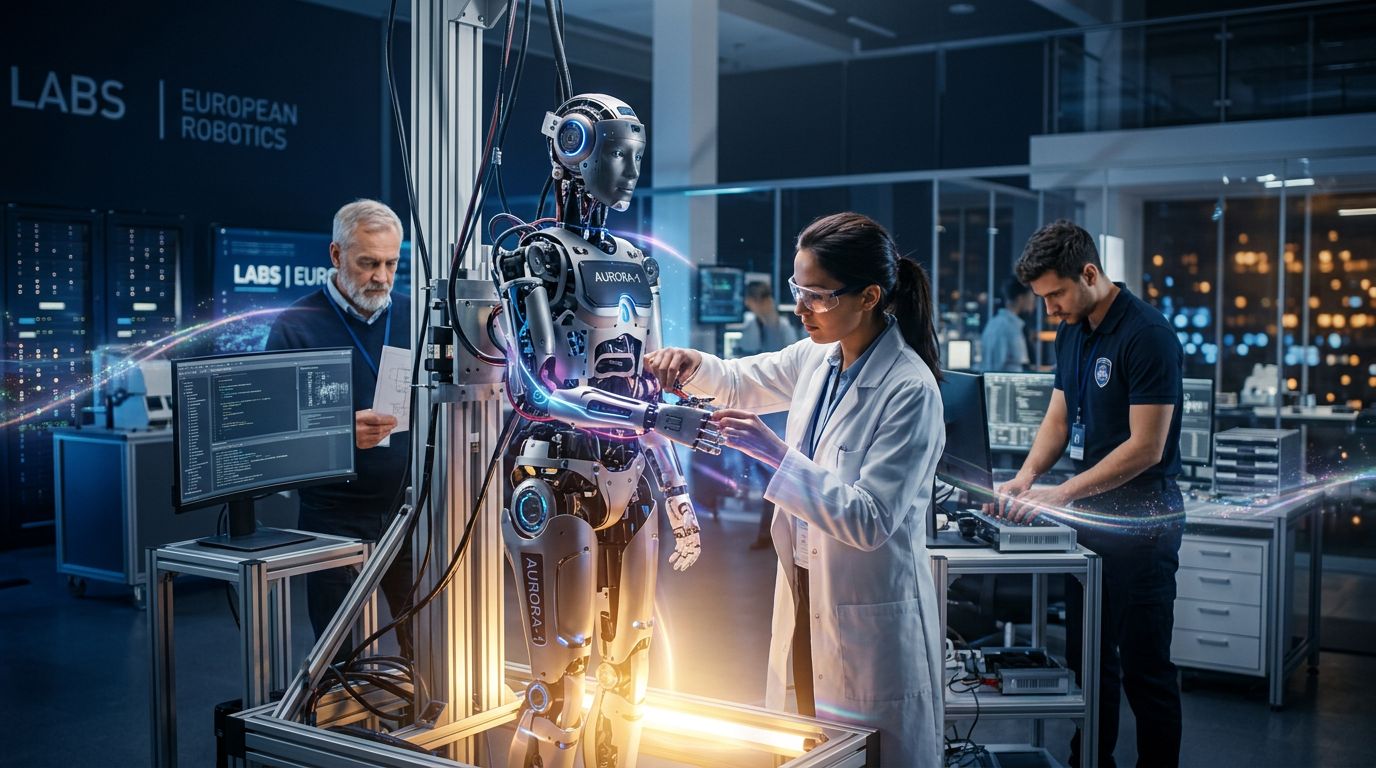
THEKER is therefore tackling the hardest problem in modern robotics. $85 million to address it is both a lot and reasonable, given what it costs to develop mechatronic systems combined with AI at this level of complexity.
Why this raise is happening now — and not before
Three factors have converged to make this moment possible.
First factor: the maturity of AI foundations. Vision models, transformer architectures applied to motor control, reinforcement learning techniques in simulated environments — all of this has progressed massively between 2022 and 2024. Startups like THEKER can now build on open-source or commercial building blocks that would have required years of R&D five years ago.
Second factor: geopolitical pressure. Europe has understood — belatedly, but genuinely — that it cannot remain eternally dependent on Asian supply chains for critical components and American startups for strategic software. Industrial robotics is infrastructure. And infrastructure cannot be outsourced.
Third factor: European industrialists are looking for local solutions. Airbus, Stellantis, major logistics groups — they have real workforce problems, real cost constraints, and a growing wariness of solutions that route their production data through Californian servers. A European solution, with GDPR guarantees and cultural proximity, is a concrete commercial argument.
Here is where it gets interesting: it is no coincidence that this raise comes a few months after Amazon, Figure AI, and Agility Robotics all announced large-scale deployments. The market is validating the concept. European investors finally have the proof they were waiting for to open the floodgates.
What this concretely means for freelancers and agencies
Wait. What does this have to do with you?
More directly than you might think. General-purpose robotics will affect the labour market in a non-linear way. Not “robots replace humans” — that narrative is too simple and too wrong. The reality is more nuanced and, for independent workers, potentially very favourable.
When repetitive physical tasks are automated, value moves up the chain. Towards design. Strategy. Client relationships. The management of complex systems. Exactly where freelancers and solopreneurs already operate.
But there is a trap. This value shift only benefits those who anticipate it. Those who continue to do low-value-added, repetitive, and undifferentiated work — even in “intellectual” fields — will face the same pressure as assembly line operators.
The question is not “will robots take my job?” The question is “am I building the skills and systems that position me upstream of automation?”
The AI analogy no one is making yet
Here is a reading I have not seen anywhere: THEKER in 2025 is OpenAI in 2019.
In 2019, GPT-2 existed. LLMs were promising. A few insiders understood what was about to happen. The vast majority of professionals had not yet realised that their daily work tools were going to be fundamentally transformed within the following 36 months.
Today, general-purpose robotics is at that same inflection point. The foundations are there. The first massive fundraising rounds are arriving. The first industrial deployments are happening. In 3 to 5 years, the impacts will be visible to everyone — and it will be too late to anticipate.
“Exponential technologies seem overestimated in the short term and massively underestimated in the long term.” — A pragmatic reformulation of Amara’s Law, verifiable on any technology adoption curve.
What we can learn from the LLM wave: those who won were not those who waited for the technology to be perfect. They were those who began working with it when it was still imperfect, who understood its real limitations, and who built their workflows around its strengths.
Three actionable insights to avoid missing the next wave
What articles on robotics never tell you: the real opportunity for independents is not in robotics itself. It is in the adjacent layers.
Follow deployments, not announcements. Press releases about funding rounds are weak signal. What matters is when the first industrial customers publish their feedback. That is where the concrete opportunities appear — integration, training, change management, technical documentation.
Understand human-robot interfaces. General-purpose robots will need user interfaces. Supervision systems. Dashboards. Communication protocols with human teams. This is UX/UI design work, product management, technical writing. Skills that freelancers already have.
Position your AI as a lever, not a threat. The companies deploying robots will be looking for partners who understand both AI systems and human challenges. If you already work with advanced AI tools — augmented project management, assistants with persistent memory, workflow automation — you have a head start that you probably have not yet measured.
Europe is finally playing its hand
Let us flip the situation: what if the real news is not THEKER in particular, but what this fundraising reveals about the European ecosystem?
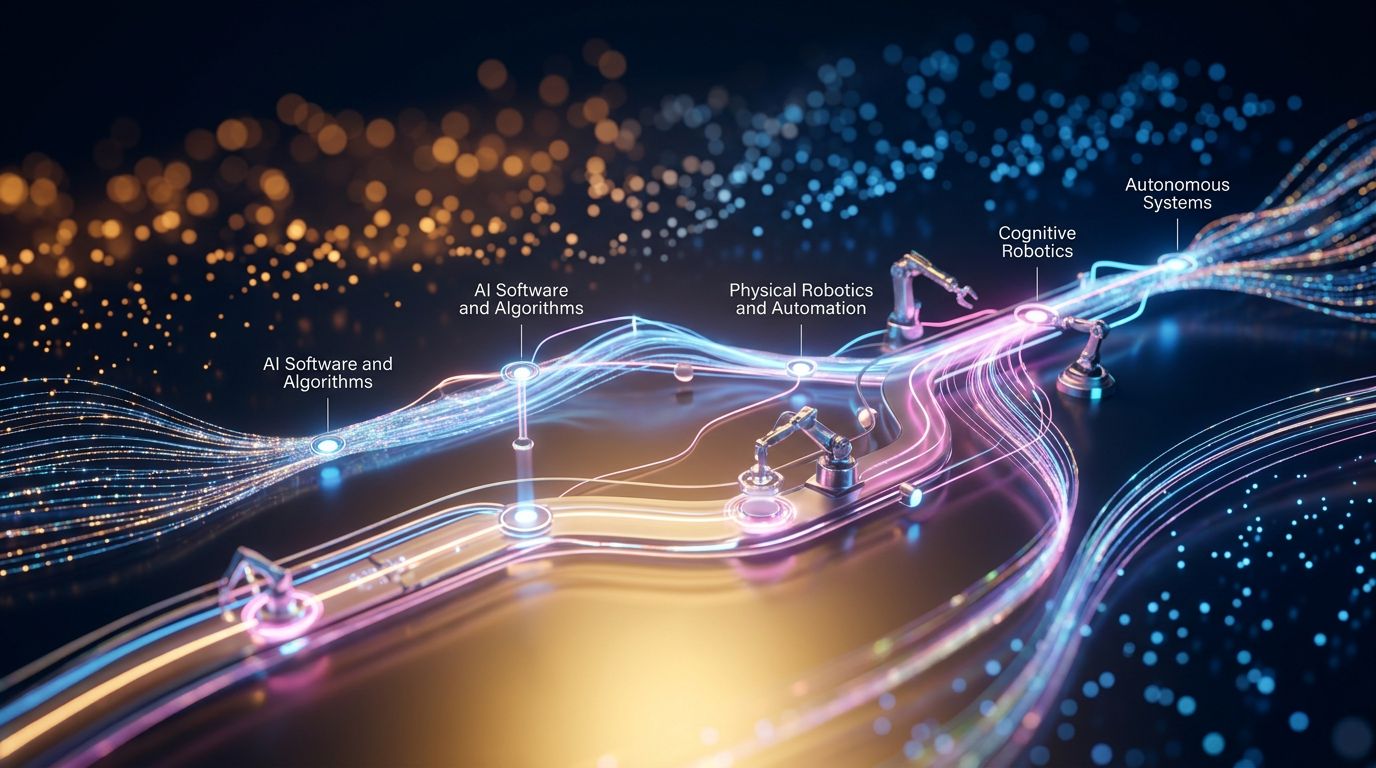
Mistral in generative AI. Helsing in defence AI. Wayve in autonomous driving. THEKER in general-purpose robotics. In 18 months, Europe has produced credible challengers in each of the deep-tech verticals previously considered reserved for Americans and Chinese.
This is not nostalgia or protectionism. It is pragmatic technological geopolitics. And for European digital professionals, it is a concrete opportunity: European deep-tech startups need marketing, communications, product, and design skills — and they prefer working with partners who understand their regulatory and cultural context.
My analysis reveals a consistent pattern: every time a tech vertical has developed in Europe — fintech, healthtech, B2B SaaS — it has generated massive demand for business services in the 2 to 3 years following the first major fundraising rounds. General-purpose robotics will follow the same path.
The window of opportunity is open — for how long?
$85 million for THEKER. This is not the end of something. It is the beginning.
More fundraising rounds will follow. More European players will emerge. And with them, an entire ecosystem will be built — suppliers, integrators, consultants, trainers, specialist content creators.
The question I am putting to you directly: are you building the skills and tools that will make you relevant in this ecosystem? Or are you waiting for the wave to be visible before you start swimming?
If you already work with tools that automate intelligence — AI project management, assistants with persistent memory, automated content pipelines — you already have the reflexes. It is now a matter of applying them to sectors in full transformation.
General-purpose robotics is coming. Europe is in the race. The window to position yourself is open now — not in two years.
If you want to start working with AI tools that truly understand your business context, Nova-Mind was built exactly for that: persistent memory of your clients and projects, workflow automation, proactive assistance. Not to replace your expertise — to multiply it.
Share this article
Social networks
Analyze with AI

Charles Annoni
Front-End Developer and TrainerCharles Annoni has been helping companies with their web development since 2008. He is also a trainer in higher education.