


South Korea, AI and Silicon Valley: When the Global Tech World Cracks
Article Summary
📖 8 min readThe article confronts two events from the same week — the massive, pragmatic AI adoption in South Korea versus the ethical backlash against Google at Stanford — to show that the real question is not 'for or against AI' but 'which tools, for which uses, with what data sovereignty'. It draws three concrete levers for freelancers and small teams.
Key Points:
- 87% of South Koreans use AI daily: a country that has settled the 'for or against' debate and treats AI as national infrastructure.
- Three foundations explain this lead: ultra-fast internet since the 2000s, a culture of efficiency, and local giants (Samsung, Kakao, Naver) that integrated AI before ChatGPT.
- At Stanford, the walkout against Sundar Pichai is not anti-AI but anti-complicity: the new generation rejects algorithmic power deployed without accountability (Project Nimbus, ICE contracts).
- The real question for builders is not 'is AI good or bad', but 'which tools, for which uses, with what transparency on data'.
- Intensive AI users gain 2 to 3 hours per day: waiting for 'perfect' AI costs 10 to 15 hours of productivity every week, and contextual memory is the real differentiator.
South Korea Is Not Pretending
87% of South Koreans use AI daily. Not to experiment — to work, communicate, decide. This figure is not an optimistic projection from a consulting firm. It is the reality of a country that decided, collectively and without superficial debate, that AI was not optional.
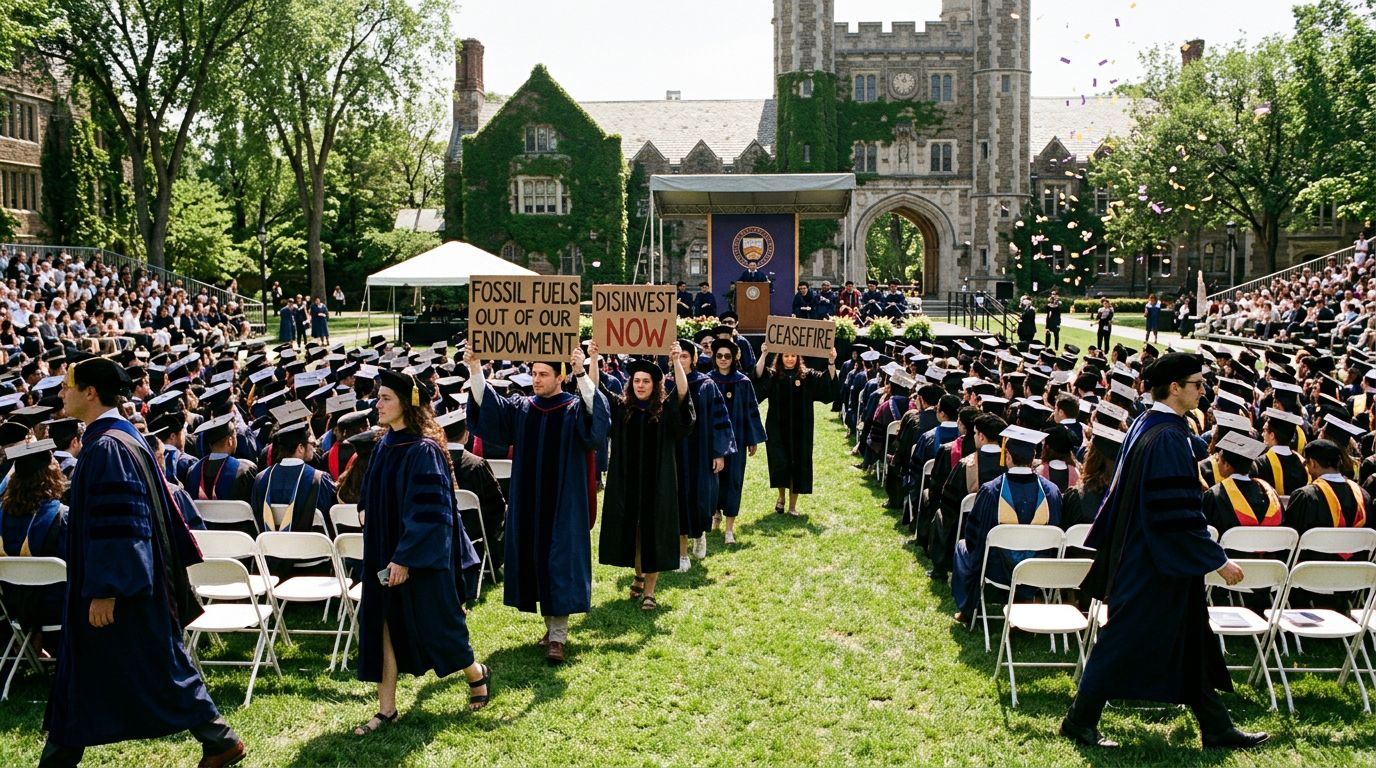
Meanwhile, at Stanford, Sundar Pichai was being booed by graduates in caps and gowns. Walkout. Banners. Would-be engineers refusing to listen to Google’s CEO.
Two events. One week. Opposing signals about the future of tech.
Here is my analysis.
Why South Korea Became the World’s AI Laboratory
This is no accident. South Korea built its massive AI adoption on three foundations that few Western countries have assembled simultaneously.
Infrastructure first. The country has had one of the fastest internet connections in the world since the 2000s. Near-universal fiber optic, 5G deployed at scale. When generative AI arrived, the ground was ready. No need to debate the digital divide — it had already been largely closed.
A culture of efficiency next. South Koreans work among the longest hours in OECD countries on average. This productive pressure creates a natural demand for any time-saving tool. AI is not perceived as a threat to employment — it is perceived as a lifeline against chronic overwork.
A local tech ecosystem finally. Samsung, LG, Kakao, Naver — giants that integrated AI into their consumer products long before ChatGPT became a common word in Europe. KakaoTalk, the messaging app used by 97% of Koreans, deployed AI features directly into the daily communication interface. Not in a separate app. In the tool already open.
“South Korea did not wait for AI to be perfect before adopting it. It waited for it to be useful.” — Korea Institute for Industrial Economics & Trade analysis, 2024

What Westerners Miss in This Story
Here is where it gets interesting.
The Western debate on AI keeps cycling between two poles: the naive enthusiasm of early adopters and the philosophical wariness of those who see an existential threat in every LLM. Both camps talk about AI as a coming phenomenon.
In South Korea, that debate is already over. AI is a fait accompli embedded in daily life.
What you never hear at European tech conferences: the massive adoption of AI in South Korea did not happen despite cultural concerns, it happened alongside them. Koreans have legitimate worries about privacy, algorithmic bias, and technological dependence. They voiced them — then kept using the tool because the practical value was obvious.
This is a technological maturity that many Western markets have not yet reached. You can be concerned AND use it. You can criticize AND adopt. That is not contradiction — that is pragmatism.
For freelancers and teams still on the fence: South Korea is a signal, not a blueprint to copy blindly. The signal says this — waiting for AI to be “perfect” or “regulated” before integrating it into your workflow means leaving 10 to 15 hours of weekly productivity on the table. Every week.
Stanford, Google and the Coming Fracture
Let us flip the situation.
Sundar Pichai, Stanford graduate, honored guest at the 2025 graduation ceremony. Dozens of students walk out. Boos. Placards denouncing Google’s contracts with the Israeli government and ICE in the United States.
This is not an anecdote. It is a symptom.
The generation graduating today from the world’s top tech universities is not anti-AI. It is anti-complicity. The distinction is crucial. These graduates use Google tools daily. They are not rejecting technology — they are rejecting the idea that tech companies can deploy algorithmic power without assuming responsibility for its uses.
Google signed contracts with the US Department of Defense and with ICE for facial recognition systems and data processing. Project Nimbus with the Israeli government. These are not rumors — they are documented facts that triggered internal resignations at Google in 2018 and repeated protests ever since.
My analysis reveals something important here: the problem is not Sundar Pichai personally. The problem is structural. When a company reaches the size and power of Google, its technological choices inevitably become political choices.
“Technology is never neutral. It amplifies the intentions of those who deploy it.” — Kate Crawford, Atlas of AI, 2021
Two Visions of AI in Conflict
On one side, South Korea: massive, pragmatic adoption, oriented toward productivity and quality of life. AI as national infrastructure. AI as a daily tool stripped of ideological symbolism.
On the other, a Silicon Valley beginning to reap the contradictions of twenty years of growth without formalized ethics. Brilliant engineers refusing to endorse certain uses. CEOs who find themselves managing as many reputation crises as product roadmaps.
What you never hear: these two realities will coexist for a long time. And for builders, freelancers, and agencies using AI daily, the practical question is not “is AI good or bad?” — that question is poorly framed.
The real question is: which tools, for which uses, with what transparency on data?
That is exactly where the difference lies between an AI platform built with convictions and an AI gadget riding the hype.
What This Concretely Changes for Your Workflow
Three actionable insights drawn from these two stories.
1. Early adoption has a real opportunity cost. South Korea proves it with numbers: intensive AI users gain on average 2 to 3 hours per day on repetitive tasks. If you have not yet integrated an AI assistant with persistent memory into your client workflow, you are losing that competitive advantage week after week.
2. Your tool choices are a positioning statement. The Stanford-Google incident is not just political news. It signals that your clients, especially the younger and more engaged ones, will start asking which tools you use and why. “We use GPT-4 via OpenAI API” will require justification that “we use a platform that stores your data in Europe” does not.
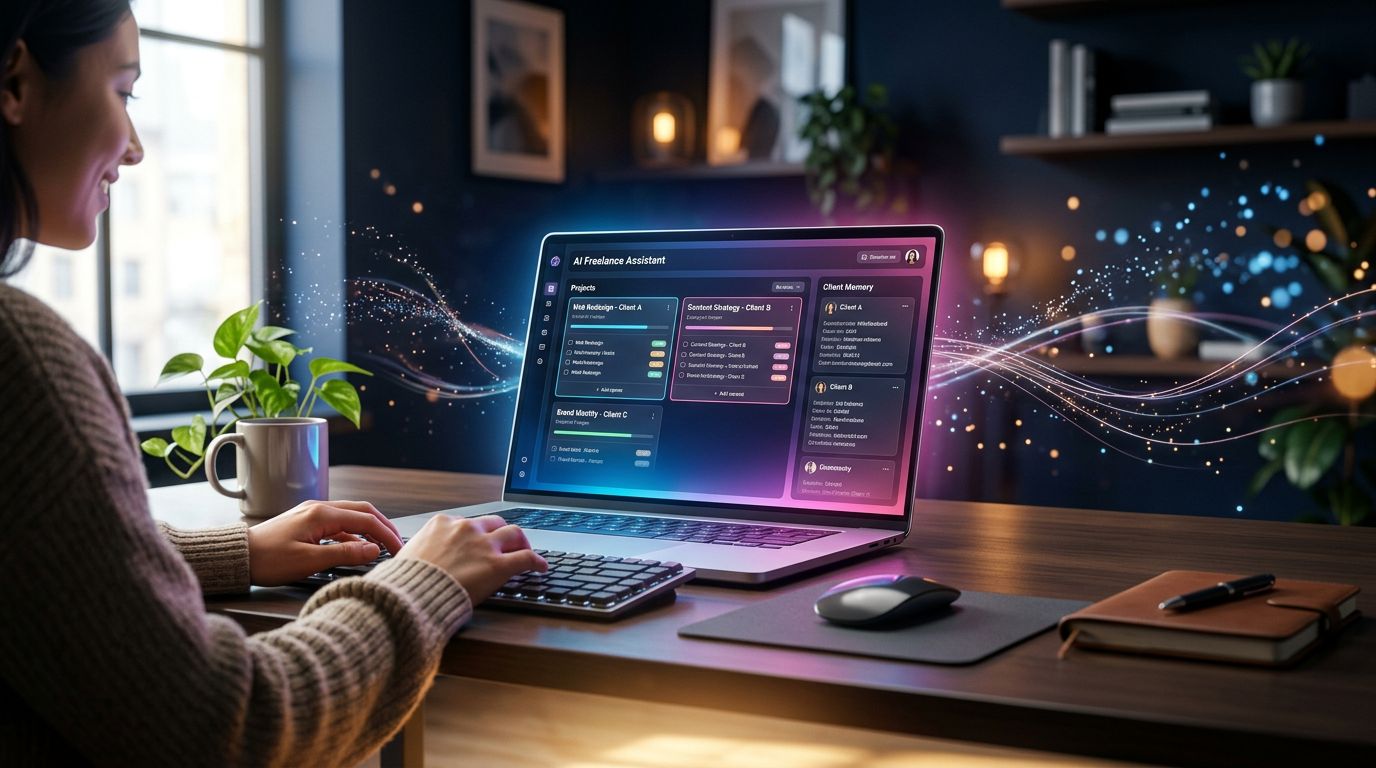
3. Contextual memory is the real differentiator. What distinguishes Korean AI adoption from the average Western use: deep integration into systems that remember. Not a chatbot you restart from scratch. An assistant that knows your 47 clients, your editorial preferences, the history of every project.
The AI You Deserve Does Not Forget
The tech world is fracturing. On one side, giants struggling to align technological power with ethical responsibility. On the other, entire markets that have decided AI is too useful to wait for the debate to be settled.
For freelancers and small teams, the lesson is simple: the competitive advantage belongs to those who integrate now, with the right tools, without sacrificing data sovereignty.
Nova-Mind is built on that conviction. Permanent memory of your clients and projects. Data on private infrastructure. No contracts with government agencies. A daily work tool — not another AI gadget in your stack.
If you are tired of re-explaining context to your AI assistant at every session, if you want a workflow that works for you even while you sleep, now is the time to try it.
Try Nova-Mind from €39/month — in the first week, you will recover at least 5 hours. Guaranteed or refunded.
Share this article
Social networks
Analyze with AI

Charles Annoni
Front-End Developer and TrainerCharles Annoni has been helping companies with their web development since 2008. He is also a trainer in higher education.