


Freelance Expense Management: What Wallester Reveals About a Problem You're Ignoring
Article Summary
📖 9 min readWhy expense management has become a strategic challenge for independents and small teams, and how tools like Wallester (virtual cards, upfront budgets, real-time visibility) turn administrative chaos into a margin lever.
Key Points:
- 37% of freelancers lose more than 3 h/week on expenses — that's ~150 h/year of billable work gone.
- The average freelancer juggles 12 to 18 active SaaS subscriptions simultaneously.
- Wallester is built on virtual cards per project, upfront budget caps, and real-time visibility on every transaction.
- Users report saving 2–4 h/week on admin tasks and cutting 15–25% of unnecessary SaaS spend at initial audit.
- The fastest margin gain comes from cost control, not rate increases: cutting €150 in unused subscriptions takes two hours.
The Number That Should Bother You
37%. That’s the share of freelancers and solopreneurs who report losing more than 3 hours a week managing expense reports, reconciling transactions, and preparing accounting documentation. Three hours. That’s 150 hours a year. Nearly four weeks of billable work going up in smoke in Excel spreadsheets and crumpled receipts at the bottom of a bag.
What if the real problem isn’t the lost time — but the complete lack of visibility into your cash flow in real time?
That’s exactly what Wallester addresses. Not as another fintech gadget. As a structural answer to a problem that has worsened alongside the rise of independent work and the multiplication of SaaS tools in our everyday stacks.
Expense Management: An “Invisible” Problem That’s Become Critical
Here’s where it gets interesting.
When freelancers and agencies talk about productivity, they immediately think of project management tools, CRMs, and AI assistants. Expense management stays in the blind spot. It’s the topic you deal with in a panic at the end of the quarter, cursing yourself for letting it pile up.
Yet the stakes are concrete and measurable.
Fragmented payments. An active freelancer in 2025 juggles an average of 12 to 18 active SaaS subscriptions simultaneously. Every automatic renewal, every tool purchase, every client travel expense represents a transaction to capture, categorize, and justify. Multiply that by twelve months, and the administrative burden is significant.
Opacity on actual cash flow. The gap between what you’ve invoiced and what you actually have in the bank after expenses can be brutal. Without a real-time view of your spending by category, you’re flying blind.
The risk of silent overspending. Small recurring expenses add up. €29 here, €49 there, €12 a month for a tool you barely use anymore. Without a control system, that’s margin evaporating without you ever seeing it coming.
What no one tells you: expense management isn’t an accounting problem. It’s a strategic management problem.

What Wallester Actually Offers
Wallester is an expense management and professional payment card issuance platform, built for businesses — but whose architecture directly addresses the needs of lean structures: freelancers, agencies, and small teams.
The core principle: replace the chaos of receipts and manual reimbursements with a system of virtual or physical cards tied to defined budgets, with real-time visibility on every transaction.
In practice, this translates into several concrete mechanisms.
Virtual Cards Per Project or Use Case
Rather than using a single card for everything — and then untangling which expense belongs to which client or project — Wallester lets you create dedicated virtual cards. One card for SaaS subscriptions. One card for travel expenses on Project X. One card for advertising spend for Client Y.
The result: categorization is automatic. No need to re-tag each transaction by hand.
Upfront Budget Control
This is where the logic shifts. Instead of discovering overspending after the fact, you set caps per card, per period, per category. Spending beyond the allocated budget is simply impossible. No more “I didn’t notice the subscription price went up.”
Real-Time Visibility
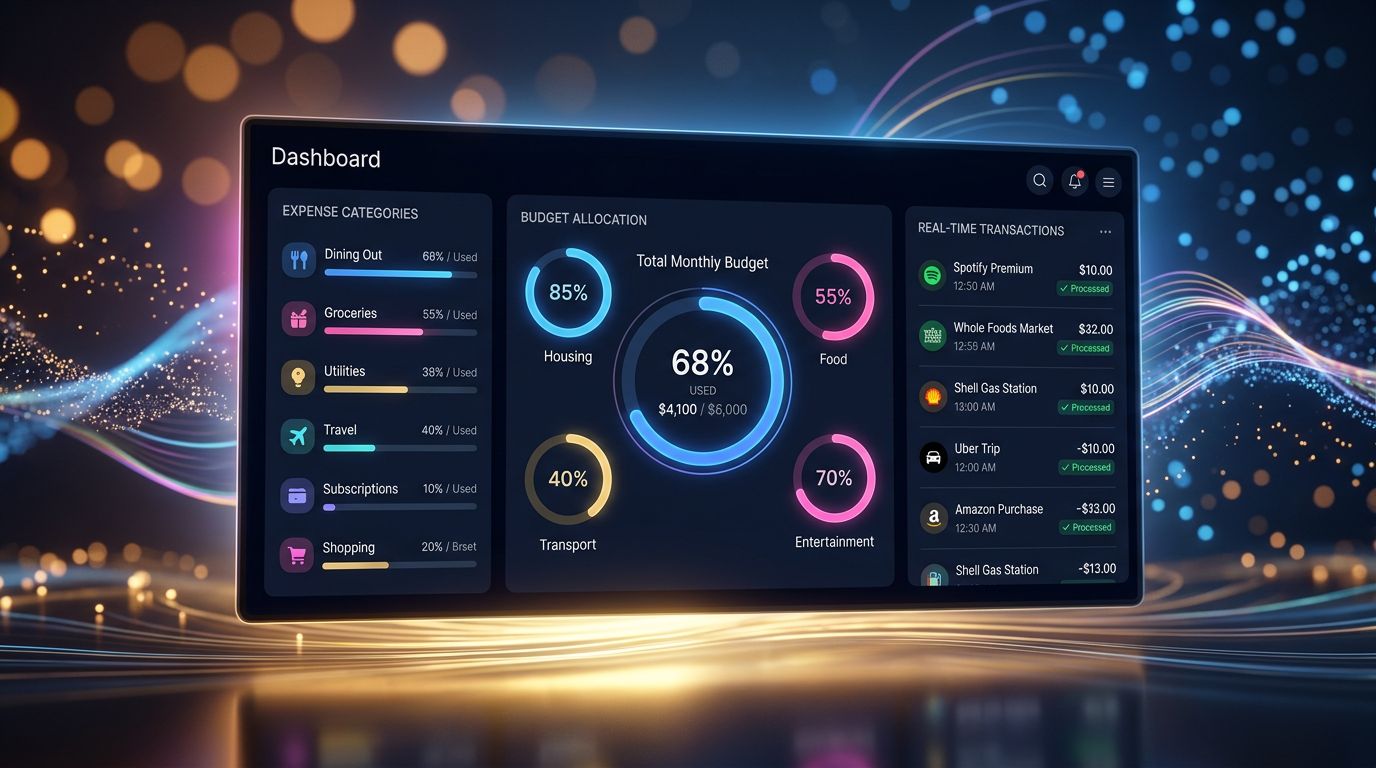
Every transaction appears immediately on the dashboard. No 48-hour delay like with some bank statements. You know exactly where you stand at any given moment.
Automated Receipt Collection
The mobile app lets you photograph receipts directly from your smartphone, automatically matched to the corresponding transaction. For online purchases, some receipts are retrieved automatically. Your accounting records build themselves continuously — not in a last-minute scramble before tax deadlines.
Why This Is a Structural Issue, Not Just Another Tool
Let’s flip the question.
The real issue isn’t “is Wallester a good tool?” — it’s “why has this type of tool become necessary in 2025?”
The answer lies in three simultaneous shifts.
The explosion of digital expenses. Ten years ago, a freelancer might have had 3 or 4 professional subscriptions. Today, between design tools, AI platforms, collaboration tools, monitoring services, hosting, and domains — the list is long. Each line item is small. The total is significant.
The rise of lean structures. Agencies of 2 to 10 people, freelance collectives, solopreneurs with occasional subcontractors: these structures have no CFO, no internal accounting department, no formalized processes. They need tools that do the work for them.
The demand for real profitability. After years of growth-at-all-costs thinking, the logic has changed. Gross margin, cash flow, profitability per client: these metrics have become central even for independents. You can’t track them without clean expense data.
“What gets measured gets managed.” — Peter Drucker
This quote, often thrown around in PowerPoint presentations, takes on a very concrete meaning here. If you don’t know how much you’re actually spending per client, per project, per month — you can’t optimize.
What Changes in Your Day-to-Day Workflow
My analysis reveals a recurring pattern among freelancers who adopt this type of solution: the time savings don’t come from where they expected.
They thought they’d save time on accounting. What they actually gain is mental clarity.
Knowing at all times where you stand financially — without actively having to “do a check-in” — frees up real cognitive load. You make better decisions about tool investments. You negotiate more confidently with clients because you know your actual margins. You sleep better before end-of-quarter deadlines.
In concrete terms, users of similar systems report:
- -2 to -4 hours per week on expense-related administrative tasks
- 15 to 25% reduction in unnecessary SaaS spending identified at initial audit
- Quarterly accounting close reduced from 1–2 days to a few hours
These aren’t marketing figures. They’re the mechanical effects of a system that automates what was previously manual.
Limitations to Know Before You Start
Honesty first.
Wallester isn’t a magic solution. A few concrete things to watch for.
The initial adoption curve. Setting up the system — creating cards, defining budgets, onboarding any collaborators — requires an upfront investment of 2 to 4 hours. It pays off quickly, but you need to plan for it.
Accounting integration. Wallester integrates with several accounting tools, but if you work with an accountant who has established workflows, verify compatibility upfront. Changing accounting-side processes requires coordination.
It’s not an invoicing tool. Wallester manages your outgoing expenses. For invoicing, tracking incoming payments, and quote management — you need other tools. It’s one piece of the puzzle, not the whole puzzle.
The discipline of categorization. The system is only as clean as you keep it. If you create catch-all cards with no clear logic, you end up with the same chaos in a different form.
3 Concrete Actions to Implement This Week
Whether you adopt Wallester or another system, here are the three decisions that actually move the needle.
1. Audit your SaaS subscriptions now. List everything that’s being auto-charged. Everything. You’ll probably be surprised. Identify what you no longer use or underuse. Cut without mercy.
2. Separate flows by nature. Even with a single bank card, start by categorizing your expenses: recurring tools / variable costs / one-off investments. Visibility starts with a clear taxonomy.
3. Set a monthly budget per category. Not to constrain yourself — to give yourself a reference point. When you go over, it’s a conscious decision, not an invisible drift.

Expense Management Is Strategy
What no productivity article for freelancers ever tells you: the fastest margin gains don’t come from selling better — they come from controlling costs better.
Raising your daily rate by 10% takes negotiation, positioning, and time. Identifying and cutting €150 in unused subscriptions takes two hours and one decision.
Wallester — and tools like it — aren’t fintech gadgets. They’re the answer to a structural reality: independents and small teams now operate with complex technology stacks, fragmented expenses, and genuine profitability requirements. Without the right system, management stays artisanal in an environment that no longer is.
The question isn’t “do I need this?” — it’s “how much is it costing me not to have it?”
At Nova-Mind, project management, client tracking, and AI context are centralized in a single tool. If you’re looking to go further — persistent memory on your clients, time tracking by task, an AI assistant that truly knows your business — that’s exactly what we’ve built. Discover Nova-Mind and see how many hours you reclaim in the first week.
Share this article
Social networks
Analyze with AI

Charles Annoni
Front-End Developer and TrainerCharles Annoni has been helping companies with their web development since 2008. He is also a trainer in higher education.